Toddlers Name Their Cat 'Favorite Friend' in a Moment of Pure, Gentle Respect
A patient cat named Milo shows what happens when kids learn to love a pet on the pet's own terms, and the internet can't stop watching.
A Quiet Declaration of Love
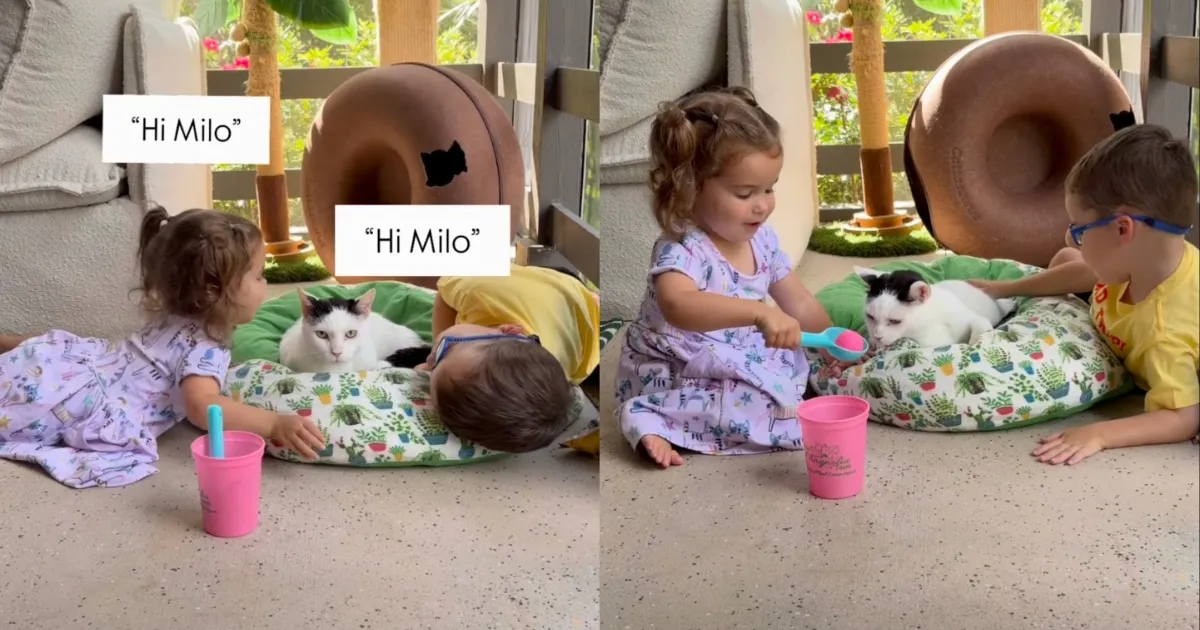
In a video shared by the Instagram account @mommaandmeow, a cat named Milo lies stretched out on a soft bed, utterly at ease. Around him, two toddlers arrange themselves carefully, giving the animal space. One child looks up and says, "Milo, he's my favorite friend, Mama." The other quickly echoes the sentiment: "He's my favorite friend too."
The rest of the exchange is a slow, deliberate ritual of introduction. One child leans in and says, "Hi Milo," before adding a personal detail: "Milo, I'm four years old." Not wanting to miss the moment, the younger sibling chimes in with their own age. Throughout the conversation, Milo does not move. He does not flinch. He simply lies there, eyes soft, accepting the attention from his tiny admirers.
The Family Behind the Viral Moment
The account that shared the clip, @mommaandmeow, describes its creator as a digital creator documenting life with three children under the age of three, all living in a home that also contains four cats. The mother behind the account uses the platform to share family moments that encourage positive relationships between kids and pets, and this particular video has become a standout example of that mission.
The setup is telling: Milo is on his own bed, not being held or restrained. The toddlers are next to him, not on top of him. The scene is a small, practical lesson in feline boundaries, filmed not as a lecture but as an ordinary moment of childhood wonder. The caption posted with the video reads simply, "Milo is a big deal around here."
Why the Cat's Calm Matters
Milo's behavior is the silent center of the video. A cat who feels cornered or overwhelmed by children typically shows it—through a twitching tail, flattened ears, or a quiet escape attempt. Milo exhibits none of that. He stays put, relaxed, as the children talk to him. This is a cat who has either been raised with a high tolerance for toddler chatter or has learned that this particular group will respect his space.
That calm is not accidental. The video demonstrates a dynamic where the cat is treated as a participant in the playtime, not a prop for it. The children's careful positioning beside him, rather than on him, signals training on both sides of the species. The result is a mutually respectful bond that reads clearly on camera, and it is a model for other households navigating the tricky terrain of introducing young kids to pets.
A Comment Section Full of Fellow Admirers
The comments on the post turned the moment into a broader conversation. One viewer joked, "Omg my heart. Milo, I'm 36 years old," adopting the toddler's introduction format. Another admitted the clip was enough to move them to tears, writing, "Omg you had to be ready to cry from how sweet this was watching this." A third commenter observed, "He looks amazing and so loved," while another simply called the video "absolutely adorable."
One particularly popular comment pointed directly at the mother: "You're teaching them to be so respectful and to understand boundaries. Good job, Momma." The praise focused less on the cat's cuteness and more on the parenting on display—a recognition that the gentle interaction was a learned behavior, not just a stroke of luck.
What This Means for Families and Their Cats
The moment captured on video offers a practical lesson for any household with both a cat and small children. Milo's comfort did not emerge from nowhere. It came from a home where the children are taught to read the cat's signals, to approach slowly, and to share space without crowding. This approach is the difference between a cat who tolerates kids and a cat who actively participates in their games.
For parents looking to foster this kind of relationship, the video is a blueprint in miniature. Let the cat choose its location. Teach the child to sit beside the animal, not over it. Allow the cat to leave whenever it wants. And give the children language for their affection, so they learn to express love through words and gentle presence rather than grabbing. The result, as seen, is a cat that feels safe enough to become a toddler's favorite friend.
Compiled from published reference material: cattime.com