The Belgian Blue's Genetic Quirk: More Muscle, Less Fat, and a Broken Promise
A single broken protein creates a 2,800-pound cow that's leaner than it looks, but three generations of breeding didn't yield the medical breakthrough expected.
The Mutation That Removes the Brake on Muscle
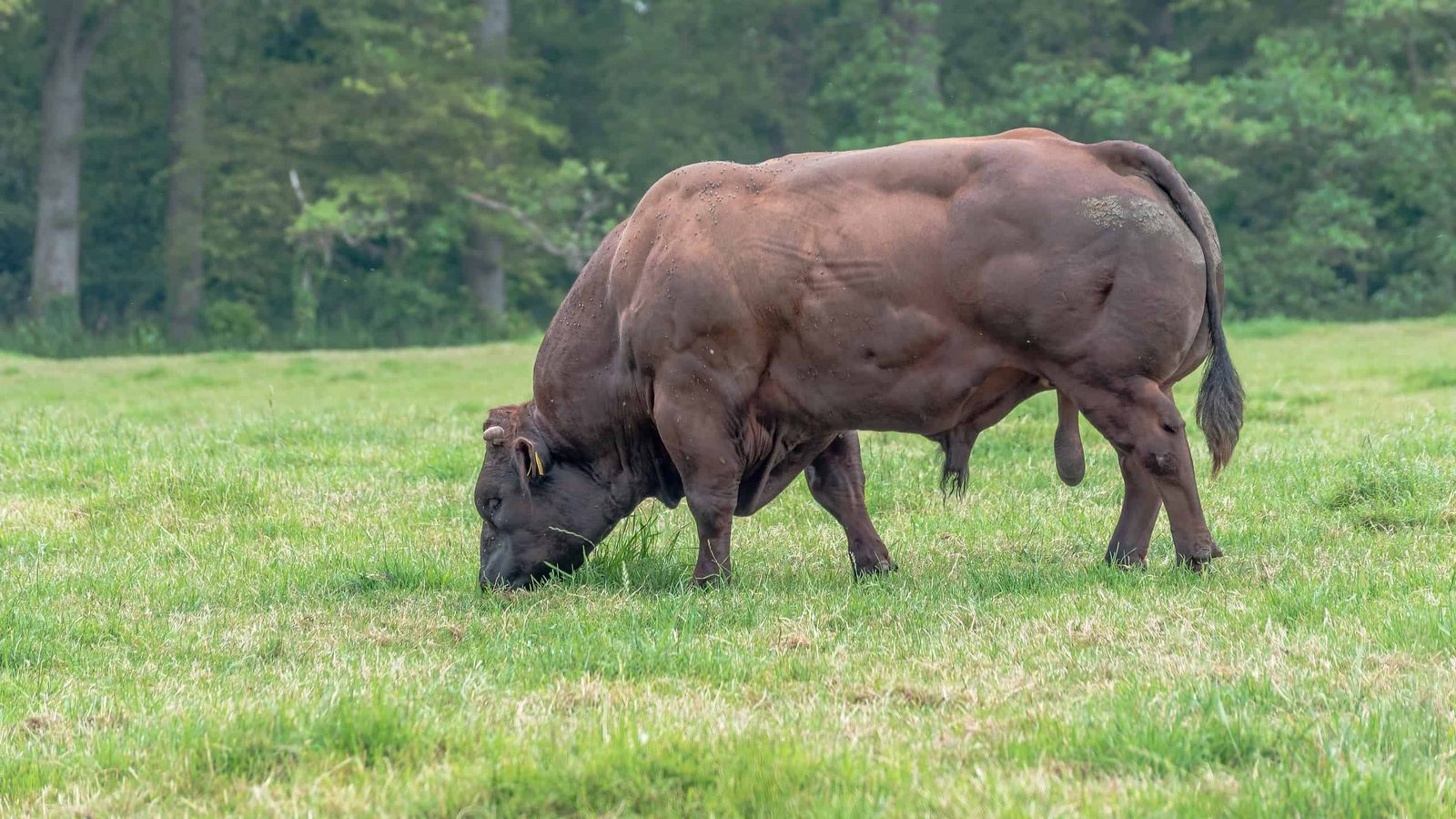
The Belgian Blue's extreme size traces back to one protein: myostatin. In ordinary cattle, myostatin limits skeletal muscle development by signaling muscle cells to stop dividing when they've grown enough. A mutation in this breed disrupts that signal, so the brake never engages. Muscle fibers multiply and thicken without any resistance training, producing the double-muscled profile that defines the breed. The gene involved is the MSTN gene, and the mutation is naturally occurring—not a laboratory invention. Calves are born with pronounced musculature and keep gaining mass without exercise. This is a pure genetic condition, not a response to lifting or feeding. It's the reason a Belgian Blue looks like a bodybuilder while standing in a pasture doing nothing but grazing.
Weighing Half a Ton More Than a Car
A typical adult Belgian Blue bull tips the scale at 2,400 to 2,800 pounds—roughly half a ton more than an average car—yet its height at the withers reaches only five feet. This paradox of compact mass comes down to a single malfunctioning protein called myostatin, which normally puts brakes on muscle growth. In Belgian Blues, that brake is broken, so muscle fibers multiply and thicken without the usual limiting signal. The result is an animal that stands eye-to-eye with an average person but outweighs a small sedan. Its silhouette is distinctly blocky: shoulders bulging like bodybuilder's, neck thick, hindquarters carved into exaggerated curves. There is no fat padding to soften the outline; the skin stretches tightly over dense muscle. This combination of modest stature and enormous weight makes the Belgian Blue less a cow than a mobile mound of beef, and that is exactly what leaves first-time observers stunned.
A Breeding Project That Spanned Three Generations
The Belgian Blue's story begins in late 19th-century Belgium, where farmers set out to create a dual-purpose breed that could supply both milk and meat. They crossed local cattle with various imported breeds, but the defining twist came from an unexpected chance mutation: a defective myostatin gene that removed the natural brake on muscle growth. Rather than using any laboratory technique, breeders simply chose the most heavily muscled bulls and cows from each generation to produce the next. Over decades, this selective pressure homozygosed the mutation, meaning every modern Belgian Blue inherits two copies of the altered gene. By the mid-20th century, the breed was effectively fixed—a uniform population of naturally 'double-muscled' animals. The process was patient and entirely traditional, predating genetic engineering by half a century. Today, a Belgian Blue calf is born with a visible head start in muscle, and that trait only amplifies as it matures. What looks like a freak of nature is actually a triumph of old-fashioned animal husbandry, honed over three generations of relentless selection.
Built for Beef and Lean at the Same Time
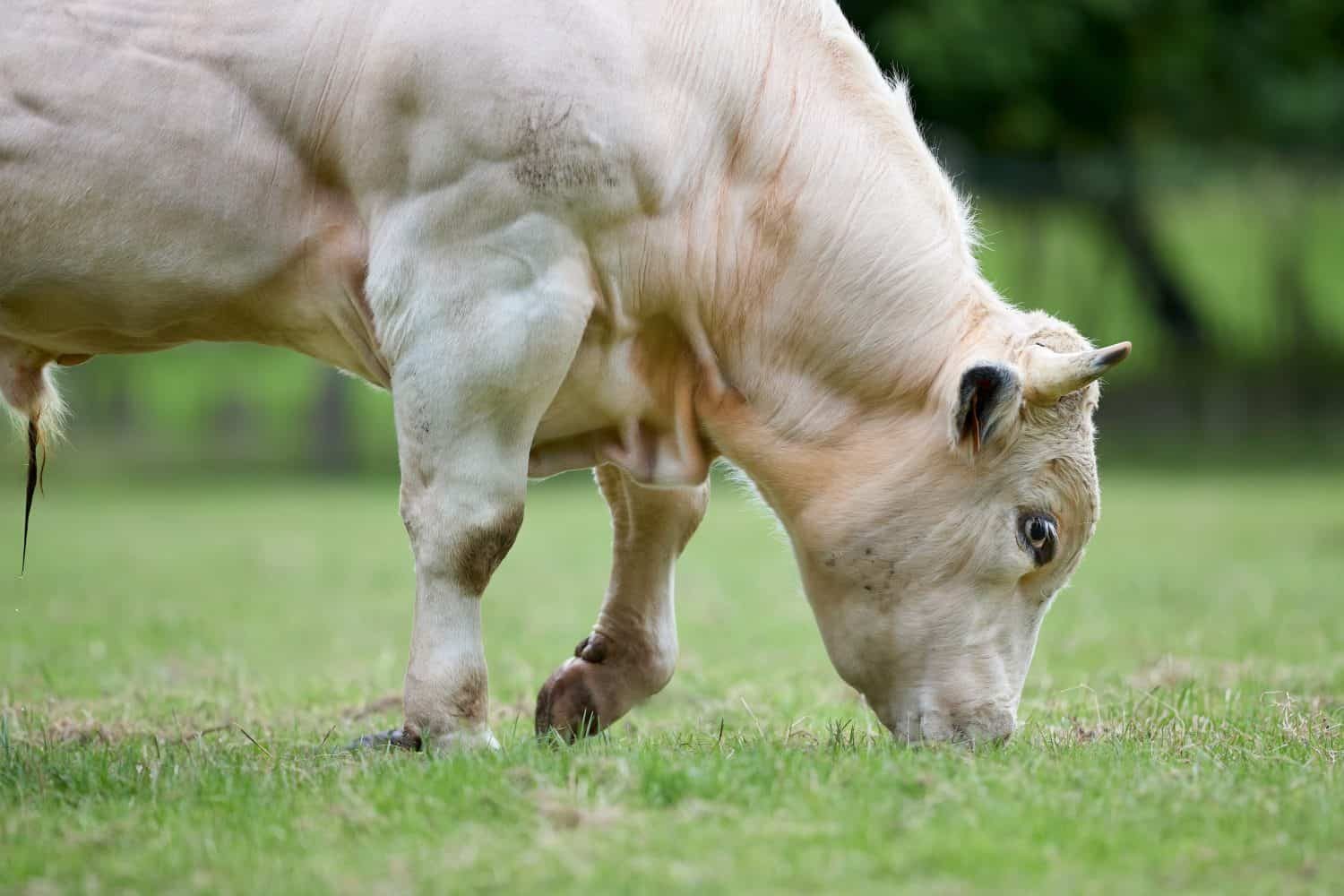
Today's Belgian Blue is a specialist in one thing: beef production. While its ancestors were dual-purpose, modern breeding has pushed the animal almost exclusively toward meat. The myostatin mutation doesn't just add muscle—it suppresses the normal mechanisms that create fat deposits, resulting in carcasses that are exceptionally lean. Cuts from a Belgian Blue routinely contain far less intermuscular fat than standard beef, yet the meat remains tender due to the fine texture of hypertrophy muscle. For producers, this translates into a higher yield of prime cuts per animal. A single bull can produce a remarkable amount of marketable steak, fillet, and roast, all with a lower fat profile that appeals to health-conscious consumers. This efficiency is why the breed has been exported so widely—not as a curiosity, but as a cost-effective way to produce quality beef. The economic logic is simple: more lean meat in a compact frame means better returns on every pound of feed invested.
The Therapy Cow That Isn't
Bovine therapy has grown in popularity because cows are naturally calming—their slow movements, warm presences, and gentle eyes soothe human anxiety. The Belgian Blue completely undermines that expectation. With a physique that looks like it lifts weights, it's the last animal you'd want to pet. While the breed's temperament is no worse than other cattle, the visual effect is intimidating. A therapy session requires a cow that invites closeness; a Belgian Blue bull is more likely to make visitors step back. The mismatch is why you won't find this breed in petting zoos or stress-reduction programs. They are working livestock, not companions. The therapy trend nicely illustrates how context changes everything: the same species that calms when small and soft becomes alarming when huge and muscular.
What Muscular Hypertrophy Really Means Here
Muscular hypertrophy usually conjures images of a weightlifter tearing muscle fibers through resistance training. In the Belgian Blue, the condition is entirely different: it's a genetic mutation that alters the very signaling system governing muscle growth. The protein myostatin acts as a natural brake, preventing skeletal muscle from over-developing. In Belgian Blues, a single malfunctioning copy—homozygous in most of the breed—disables that brake, so muscle cells continue to multiply and thicken without the usual limit. This process begins in the womb, and calves are born with visibly swollen shoulders and thighs, a trait that only intensifies as they mature. No amount of exercise or special diet can replicate this effect; it's hardwired into every cell. The result is a uniform, consistent look across the breed—every Belgian Blue shows the same exaggerated contours, from the curved top line of the back to the bulging gaskins. Thus, a Belgian Blue bull's size is predetermined from conception: the myostatin gene is faulty in both chromosomes, so the brake on muscle growth never engages.
Compiled from published reference material: a-z-animals.com