Dofu's Plant-Based Litters: Cereal, Coffee, and Tofu Under the Microscope
We break down Dofu's five unconventional cat litters, from their clumping power to real-world customer gripes.
What varieties of Dofu cat litter are available?
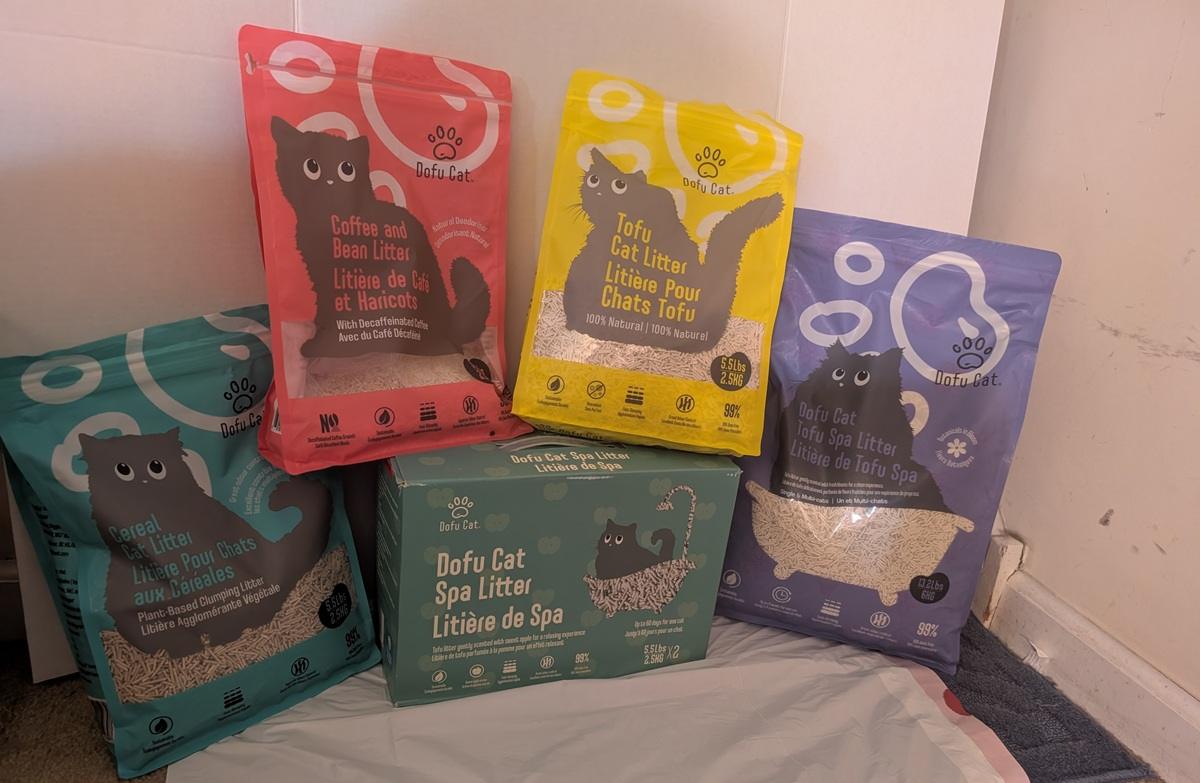
Dofu Cat Litter offers five distinct plant-based formulas, each with unique ingredients and scents. The lineup includes Tofu Cat Litter, available in 5.5-pound, 13.2-pound, and 19.8-pound bags; Tofu Spa Litter – Apple and Tofu Spa Litter – Botanicals in Bloom, sold in 5.5-pound boxes and 13.2-pound bags; Coffee and Bean Litter in 5.5-pound and 13.2-pound bags; and Cereal Cat Litter, exclusively in 5.5-pound bags. All litters feature a stick-like pellet shape that minimizes tracking by not sticking to cats' paws, resembling narrow little sticks rather than fine grains. The Tofu and Cereal formulas are unscented with a slight natural smell, while the Spa variants add apple or floral notes, and the Coffee and Bean litter provides a mild coffee aroma. In practice, these pellets create less mess, as they are easy to scoop and produce negligible dust, earning high ratings for dust control (5/5) and ease of scooping (5/5). Clumping ability is also good (4/5), with customers noting that litters like Cereal have 92% positive feedback on clumping. Owners should consider their cats' preferences, as the scented options might appeal more, and the different sizes allow for trial or bulk purchases. Available directly from Dofu's website and retailers like Chewy and Amazon, these litters cater to those seeking natural, low-mess options.
How do Dofu litters compare to traditional clay litter?
When comparing Dofu litters to traditional clay, the key difference lies in their composition and performance. Clay litter uses tiny, granular grains that easily stick to cats' paws and track around the house, whereas Dofu's plant-based pellets are cylindrical and larger, virtually eliminating tracking as they don't adhere to fur. In testing with six cats, clay litter was the top choice for solid waste, with clay-filled boxes consistently showing more fecal deposits. However, Dofu boxes saw regular use for urination, with at least one cat preferring them for pee. Odor control varies: the Cereal formula receives 92% positive reviews for clumping, which helps contain smells, but unscented Tofu litter can develop ammonia-like odors when wet, a concern noted by 10% of reviewers. Dust control is superior with Dofu, earning a 5/5 rating, unlike clay which often produces dust clouds. Price-wise, Dofu is more expensive, rated 1/5 for cost per pound. For readers considering a switch, it may help to gradually introduce Dofu litter by mixing it with clay, observing individual cat reactions, and prioritizing formulas with better odor management based on household needs.
What do customer reviews say about Dofu litter on Chewy?
Customer reviews for Dofu litters on Chewy show varied reception across formulas. Cereal Cat Litter leads with 83% four and five-star ratings and only 3% one-star reviews, with positive feedback focusing on clumping ability. The unscented Tofu Cat Litter has 70% four and five-star reviews, but 10% one-star complaints cite bad smells, such as vinegar or ammonia, developing after cat urine. Coffee and Bean Litter received 67% four and five-star reviews, yet it has the highest proportion of one-star feedback, with users criticizing it for becoming sticky when wet and having a divisive coffee scent that some find unpleasant. Across all formulas, customers consistently praise the minimal tracking due to the stick-like pellet shape, which doesn't stick to paws or spread around the home. Other frequent positives include negligible dust production and flushability for convenient disposal. Reviewers also appreciate the natural, plant-based ingredients, though some note the premium cost as a drawback. Specific comments, like Kiki's on Chewy, recommend the litter for its health benefits and performance, while others like Joleen mention issues with messiness in the Coffee and Bean variant.
Is Dofu cat litter a good option for households with multiple cats?
Dofu litters may not be the optimal choice for multi-cat households, as evidenced by their low rating of 1/5 in multi-cat formulas. In a test with six cats, clay litter was consistently preferred for solid waste, while Dofu boxes were used more for urination, suggesting that in busy environments, cats might avoid them for feces. Odor control can be challenging; for instance, the unscented Tofu litter can develop ammonia smells when wet, which might intensify with high traffic if not scooped frequently. The Coffee and Bean formula has reported issues with stickiness when wet, potentially requiring more frequent cleaning to prevent mess buildup in multiple boxes. Customer reviews indicate that while all formulas minimize tracking and dust, which is beneficial in multi-cat homes, performance in odor management varies. Owners should be prepared for diligent scooping and possible litter mixing to encourage use. For households prioritizing environmental benefits, Dofu offers biodegradable materials, but practical adjustments, like providing alternative clay boxes, may help during transition periods.
How much does Dofu cat litter cost, and is it worth the price?
Dofu cat litter is priced higher than many traditional options, reflected in its 1/5 rating for price per pound. Specific costs vary by formula and size; for example, Tofu Cat Litter comes in bags ranging from 5.5 to 19.8 pounds, with larger sizes potentially offering better value per unit. The value proposition hinges on individual priorities: Dofu scores highly for natural and alternative options (5/5) and dust control (5/5), appealing to eco-conscious owners who want biodegradable materials that reduce landfill waste, as emphasized by the brand's mission. However, it falls short in multi-cat performance (1/5), which might affect cost-effectiveness in busy households. Customer reviews mention the steep price, with some justifying it for the environmental benefits and minimal mess, while budget-conscious buyers hesitate. The litter's clumping ability (4/5) and ease of scooping (5/5) can lead to less waste and longer litter life, potentially offsetting costs. Readers should assess their cats' preferences, as adjustment periods may require buying smaller trial sizes initially. Sold on their website and through online stores, price comparisons are possible, but the overall investment aligns with sustainable pet care goals.
What are the main advantages of using Dofu's plant-based litters?
Dofu's plant-based litters provide several key advantages, starting with their natural, biodegradable ingredients such as tofu, coffee grounds, and cereal grains, which help reduce environmental impact by avoiding non-renewable materials that fill landfills. The cylindrical pellet design is a standout feature; these stick-like pieces minimize tracking by not adhering to cats' paws, unlike traditional clay litters that leave dusty pawprints. In terms of cleanliness, Dofu litters excel in dust control, earning a 5/5 rating for producing negligible dust, which benefits both home hygiene and respiratory health. Many formulas are flushable, adding convenience for disposal without clogging pipes. The Spa variants offer pleasant apple or floral scents, enhancing the user experience, while the Coffee and Bean litter has a mild coffee aroma. Clumping ability is reliable (4/5), and easy scooping (5/5) further simplifies maintenance. Customer testimonials highlight these benefits, such as Victoria praising the lack of smell and dust in the unscented Tofu litter. Overall, these litters combine practicality with eco-friendliness, making them a compelling choice for owners seeking sustainable and efficient options.
Do cats readily adapt to Dofu litter if they're used to clay?
Cats accustomed to clay litter may need time to adjust to Dofu's plant-based pellets due to differences in texture and smell. In a household with six cats, clay remained the top choice for solid waste, but Dofu boxes were used for urination, indicating that gradual acceptance is possible. To facilitate adaptation, owners can start by mixing a small amount of Dofu litter with the existing clay, gradually increasing the proportion over time. The stick-like pellet shape is unfamiliar, but its minimal tracking and dust might appeal to cats sensitive to mess. Some cats may prefer the scented Spa litters, while others might dislike certain aromas, so observing individual reactions is key. Customer reviews suggest that many cats adapt well; for example, the Cereal litter has high positive ratings for clumping, which can encourage use. However, the unscented Tofu litter's potential for ammonia smells when wet might deter some cats. Providing multiple litter boxes with different formulas during the transition can help identify preferences. Patience is essential, as feline behavior varies, and environmental benefits should be weighed against potential adjustment challenges.
What sets Dofu's brand story apart in the pet litter market?
Dofu Cat's brand story is rooted in a personal mission that sets it apart in the pet litter market. The founders were inspired by their foster kitten, Stanley, who arrived with a dusty litter that left pawprints throughout their home, prompting research into traditional litters. They discovered that many non-biodegradable and non-renewable litters contribute significantly to landfill waste, an issue they wanted to address. With a growing family of seven rescued cats, they developed plant-based alternatives using materials like tofu, coffee, and cereal grains to create a litter kinder to the environment, their home, and their pets. This narrative drives product innovation, focusing on natural ingredients that minimize tracking and dust. The brand emphasizes sustainability, with litters that are biodegradable and often flushable, reducing ecological footprints. Sold directly from their website and through online marketplaces, Dofu makes it accessible to eco-conscious cat owners. Customer feedback often connects with this story, praising the lack of mess and environmental benefits. By prioritizing rescue and sustainability, Dofu distinguishes itself from conventional brands, with its family of seven rescued cats and commitment to biodegradable materials at the core of its identity.
Compiled from published reference material: cats.com