City Dogs, Small Spaces: A No-Nonsense Guide to Apartment Living Done Right
The difference between a miserable apartment dog and a content one usually comes down to flooring, light control, and how you schedule their walks.
Start From the Ground Up
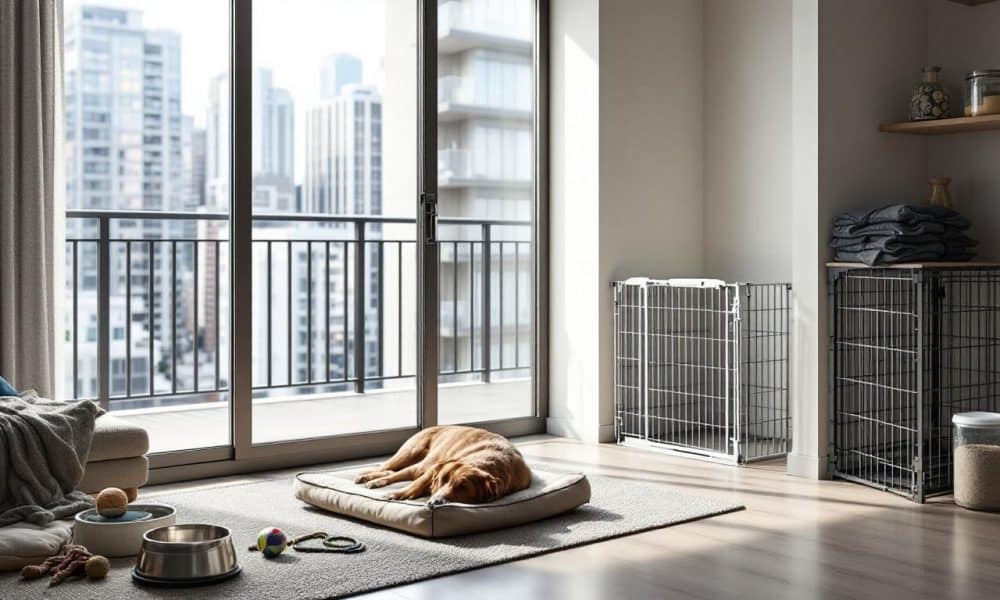
The surface under your dog's paws is doing more work than you think. Tile and laminate flooring outperform carpet in apartments because they don't trap urine scent — and that matters more than convenience. Carpet fibers hold onto that odor even after professional cleaning, which signals to your dog that a specific spot is an acceptable bathroom. For anyone still housebreaking, that's sabotage. Washable area rugs over hard flooring give you a quick swap option when accidents happen, and baby gates blocking off carpeted zones keep the problem contained until outdoor-only habits stick. Pair that setup with spill-proof water bowls on non-slip mats. In a tight apartment, a tipped bowl sends water under furniture and along baseboards before you even notice. A rubberized mat catches the splash, keeps the bowl anchored, and gives older dogs stable footing on slick surfaces — a real concern for breeds prone to hip dysplasia like Labrador Retrievers and German Shepherds.
Sunlight Is the Enemy You're Ignoring
Most apartment owners underestimate what direct sun does to an indoor dog. Dogs don't cool the way humans do — they pant and sweat only through their paw pads, which gives them almost no heat advantage on a warm floor. Thermal-blocking curtains or cellular shades solve this, cutting UV exposure that damages eyes and skin over time. Close them during peak heat, which runs roughly 11 a.m. to 4 p.m. in most cities. That window is when an apartment with south- or west-facing glass can climb well above comfortable temperatures for a resting dog. Brachycephalic breeds — French Bulldogs, Pugs, Boston Terriers — face the steepest risk here because their shortened airways already compromise their ability to regulate body temperature. Beyond curtains, a fan left on low provides soft background noise that helps desensitize your dog to hallway activity and neighboring-unit sounds. Keep the thermostat consistent; dogs show visible discomfort in spaces that swing between warm afternoons and air-conditioned nights.
Two Walks Won't Cut It for Every Breed
The two-walks-a-day rule is a starting point, not a ceiling, and breed energy levels change the math fast. High-energy breeds like Whippets and dogs under three years old perform better on three shorter outings spread across the day than on two long ones. The reason is practical: a single long morning walk burns energy by noon, but the dog still faces six or eight hours before the evening outing with nothing to spend it on. That gap is when barking spikes and furniture takes a hit. Set your first walk before you leave for work and your last one after you return, holding those times steady seven days a week. Consistency in schedule matters more than duration — a dog with two reliable, same-time walks behaves better than one getting unpredictable hour-long hikes. Vary your routes during those walks so your dog encounters different surfaces like grass, gravel, and pavement, along with new scents and environmental stimuli. That sensory variety is mental exercise layered onto the physical, and it wears a dog out faster than distance alone.
Hydration and the Small Stuff That Adds Up
Place water bowls in at least two spots — one near the retreat area and one in the main living space. Dogs that have to cross an apartment every time they're thirsty drink less, and dehydration directly undermines their ability to cool themselves through panting. In summer months or apartments with dry heating, this is a measurable difference, not a minor courtesy. Refresh the water daily, not just when it looks low, because apartment air carries dust and dander that settle on the surface between drinks. Pair hydration with consistent room temperature and the quiet retreat setup already described, and you've built an environment where the dog's baseline stress drops noticeably. The cumulative effect of these small moves — right flooring, right light, right schedule, right water access — is what separates a dog that merely survives apartment life from one that genuinely thrives in it.
Compiled from published reference material: www.dogingtonpost.com