Two Skin Bumps That Look Identical — But One Is Cancer and the Other Isn't
A harmless "button tumor" and a dangerous mast cell tumor can be dead ringers on your dog's skin, and knowing the difference starts with one simple in-clinic test.
The "Button Tumor" That Disappears on Its Own
Histiocytomas earned the nickname "button tumors" for a reason: they are small, raised, smooth-surfaced, and almost always circular. They tend to show up on the head, ears, or legs. Age is a strong signal — these growths are found almost exclusively on dogs younger than three years old. Short-haired breeds appear to be overrepresented, though Flat Coated Retrievers carry a notably higher incidence despite their longer coats. The lump is typically not itchy and does not spread. Given enough patience — usually a couple of months — a histiocytoma will regress on its own. That said, many owners opt for surgical removal for peace of mind; veterinarians report roughly a 50/50 split between watch-and-wait clients and those who choose excision, with both groups seeing equally good outcomes. Histopathology on a removed histiocytoma confirms the benign diagnosis and closes the case.
One Needle, Two Answers
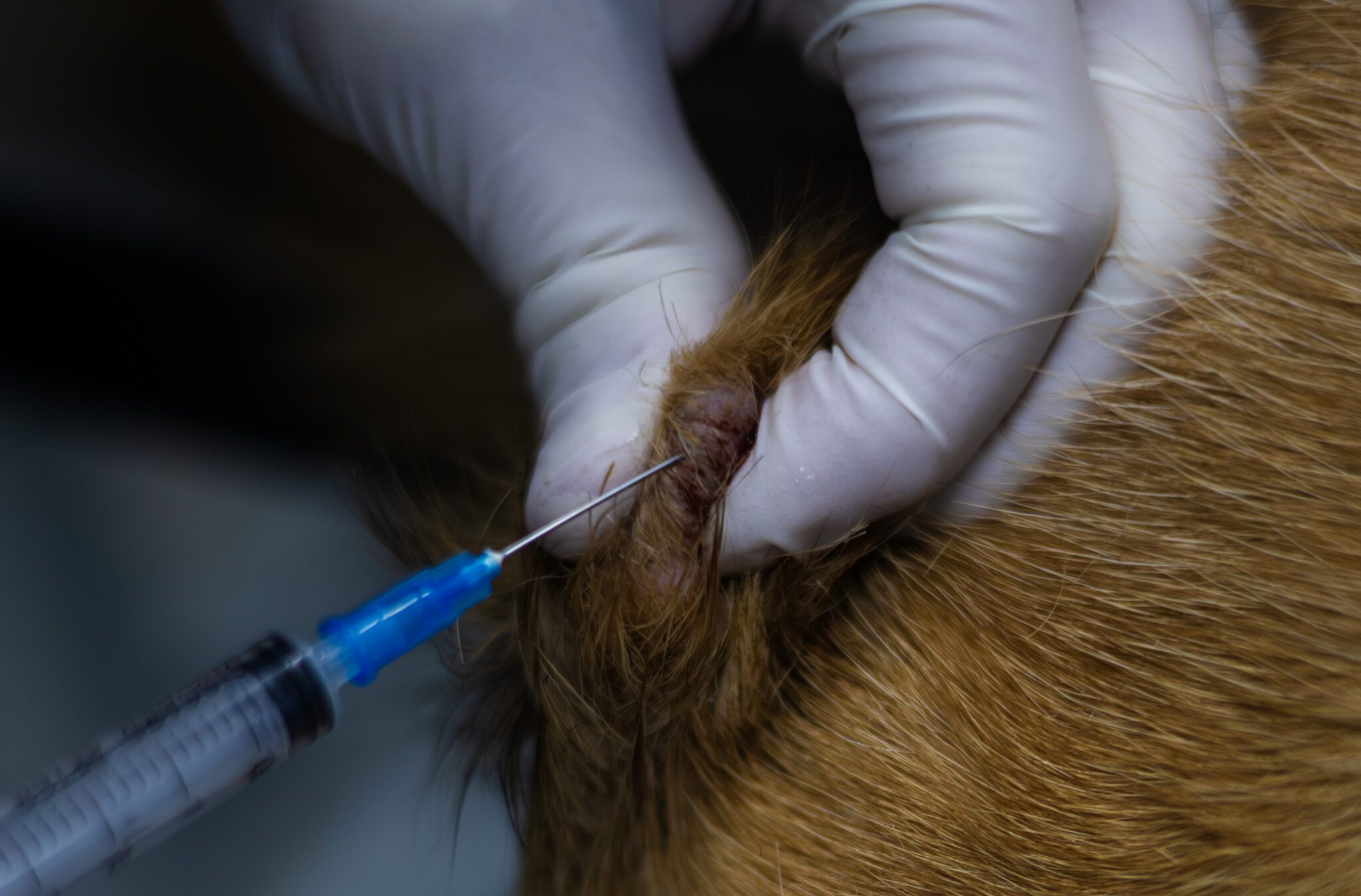
A fine needle aspirate is the diagnostic bridge between these two lookalike growths. The procedure takes seconds: a small-gauge needle draws cells from the lump, the sample is placed on a slide, and a veterinarian examines it under a microscope. Mast cells have a distinctive granular appearance under staining, making them identifiable even at the primary-care clinic level. When the cytology confirms a mast cell tumor, it also helps inform the tumor grade, which directly shapes the treatment plan. For histiocytomas, the cell sample reveals a uniform population of round histiocytes with no malignant features, sparing the dog an unnecessary surgery if the owner is comfortable monitoring. Sending slides to a board-certified veterinary pathologist adds a layer of certainty that matters when the stakes are as high as a cancer diagnosis.
Surgery That Looks Bigger Than the Problem
Surgical excision is the primary weapon against mast cell tumors, and it can be curative for low-grade masses that have not metastasized. Owners are often startled by the incision size: a lump that measured a centimeter across may leave a surgical wound several times that length. The reason is margin control — surgeons excise wide and deep to ensure clean margins, meaning no cancer cells are found at the edges of the removed tissue. Histopathology of the excised tissue confirms whether those margins are clean. If they are not, or if the tumor is high-grade, follow-up radiation therapy or chemotherapy may be recommended. Dogs that develop one mast cell tumor are statistically prone to developing another, which means ongoing skin checks become a permanent part of the care routine. Low-grade tumors removed with clean margins often never recur, but vigilance is the owner's ongoing responsibility.

What Every Owner Should Watch For
Between veterinary visits, the most useful habit is a regular hands-on skin check. Run your fingers over your dog's body during grooming or petting and note any new lump, bump, or swelling. Pay attention to lumps that change size rapidly, become itchy, or cause surrounding skin to redden — all hallmarks of mast cell activity. For dogs under three, a new red circular bump on the head or ears is statistically more likely to be a histiocytoma, but "more likely" is not a diagnosis. High-risk mast cell tumor breeds — Boxers, Boston Terriers, Bulldogs, Golden Retrievers — warrant extra scrutiny at any age. Any new or changing skin growth should prompt a fine needle aspirate before a decision is made to monitor or remove. The test is inexpensive, fast, and painless. It is the one step that turns uncertainty into a plan.
Compiled from published reference material: www.whole-dog-journal.com