From Pool Noodles to Sibling Rules: Lala's Unorthodox Road to Adoption
A misdiagnosed head sway led Lala to a foster-based rescue, where feeding trials paired elevated bowls with pool noodles. Her adoption required a sibling and no high-prey dogs—and her foster parents had the final say. This is how one kitten thrived.
A head sway that isn't cerebral hypoplasia
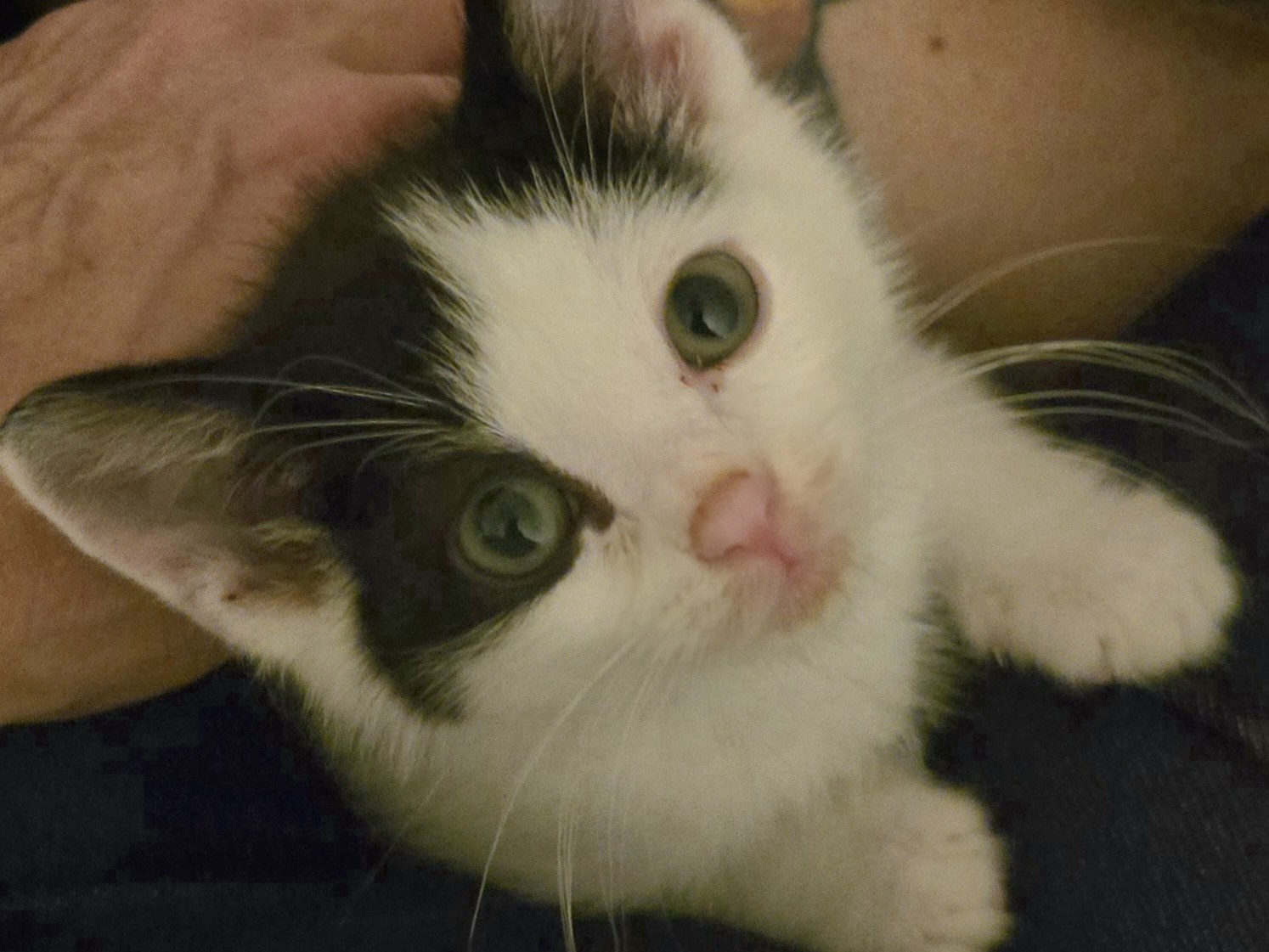
At 9 weeks old, Lala's head sway is so pronounced it looks like he's emphatically shaking "no," and he spins in circles when excited. The movement isn't typical of cerebral hypoplasia, the usual wobbly kitten condition. Several feline neurologists, consulted through Sophia L'Orange Kitten Rescue's vet network, agree it's more likely a vestibular or cochlear defect—a birth defect in the deep inner ear. At his age, those structures are too small to see on imaging; they may be visible when he's fully grown, but medical or surgical intervention is doubtful. He can eat, drink, and use the litterbox on his own. He also stops swaying when he turns his back to the room and looks over his shoulder, and he freezes during petting sessions. The hope is he'll gain strength as he grows, but this may be permanent.
A 100% volunteer, foster-based rescue
Sophia L'Orange Kitten Rescue is a 100% volunteer, foster-based organization, operating entirely without a shelter building; every cat and kitten lives in a volunteer foster home while awaiting adoption. The organization focuses on pregnant moms, moms with kittens, and orphaned kittens, but they never turn away community members in need. All medical care and nutrition are high-quality, funded solely by donations and grants—there are no paid staff members. Before adoption, every cat is spayed or neutered and vaccinated, and the rescue is education-focused, teaching adopters and the public about responsible pet ownership. Leader Jenia has a particular passion for special-needs kittens, which is why Lala found a place with them. In practice, this foster-based model gives kittens time to grow and be assessed, and it means adopters work directly with the person who raised them. It also allows the rescue to take in as many cats as they have foster homes for, often more than a shelter could handle. If an adopter's circumstances change, the rescue guarantees they will take the cat back or assist with rehoming, offering lifelong security. Readers can help by donating funds, supplies, or time—volunteers are needed for administrative tasks, social media, and fundraising, and every dollar goes directly to care. They also encourage everyone to spay or neuter their own pets to prevent more litters.

From an unplanned litter to a rescue clinic
Lala's story began when a woman with an unspayed cat ended up with 7 kittens. At just 4.5 weeks old, the kittens were too young to be weaned, but the woman was going away and planned to give them away. A rescue friend intervened, taking all 8 cats—the mama and her 7 kittens—into her clinic. It was immediately clear that one kitten, Lala, was unlike the others: he had a pronounced head sway. The three larger kittens stayed with their mother, while Lala and his three sisters, the four smallest, were placed with a foster to reduce competition at the food bowls and give each kitten individual attention. With nutritious food, medical attention, and love, the four tiny kittens are doing really well.
Lala and his Teletubby sisters
Dipsy, Po, and Tinky Winky are Lala's three sisters, and together they make up the four smallest of a seven-kitten litter. Their Teletubby names hint at the rescue's playful approach, but their arrival was serious: they were too small and needed a quieter foster home with less competition at the food bowls. While the three larger brothers stayed with their mother, these four went to a foster who could give them individualized care. The sisters have thrived with extra nutrition and attention, and they share a special bond with Lala. He often leans his head against one of them while eating, using their bodies as a stabilizing brace—a trick they tolerate without complaint. This is not a behavior another unrelated cat might accept, so the rescue insists that Lala go to his forever home with at least one of his sisters. The rescue always recommends that young kittens be adopted with a sibling or into a home with a playful resident cat; for Lala, a sibling is non-negotiable because he uses his sisters for support at mealtime, and while they tolerate it, an unrelated cat might not.

Feeding trials: from elevated bowls to pool noodles
Foster caregivers tried several accommodations to help Lala eat more steadily. They tested elevated bowls, but Lala prefers bowls on the floor. They tried food in piles and clumps, but Lala likes his food mushy—so much so that his foster has to clean his face several times a day. They even attempted to stabilize his head with pool noodles and toddler socks, but he just froze up, so those were abandoned. Lala eats "like Lala," as his foster puts it. He manages to eat and drink on his own, though the mess is part of the deal. This trial-and-error process demonstrates how foster-based rescues can individualize care. The key is letting Lala find his own eating style, which he has. His foster has learned to accept the extra cleanup.
Lala's quirky movements
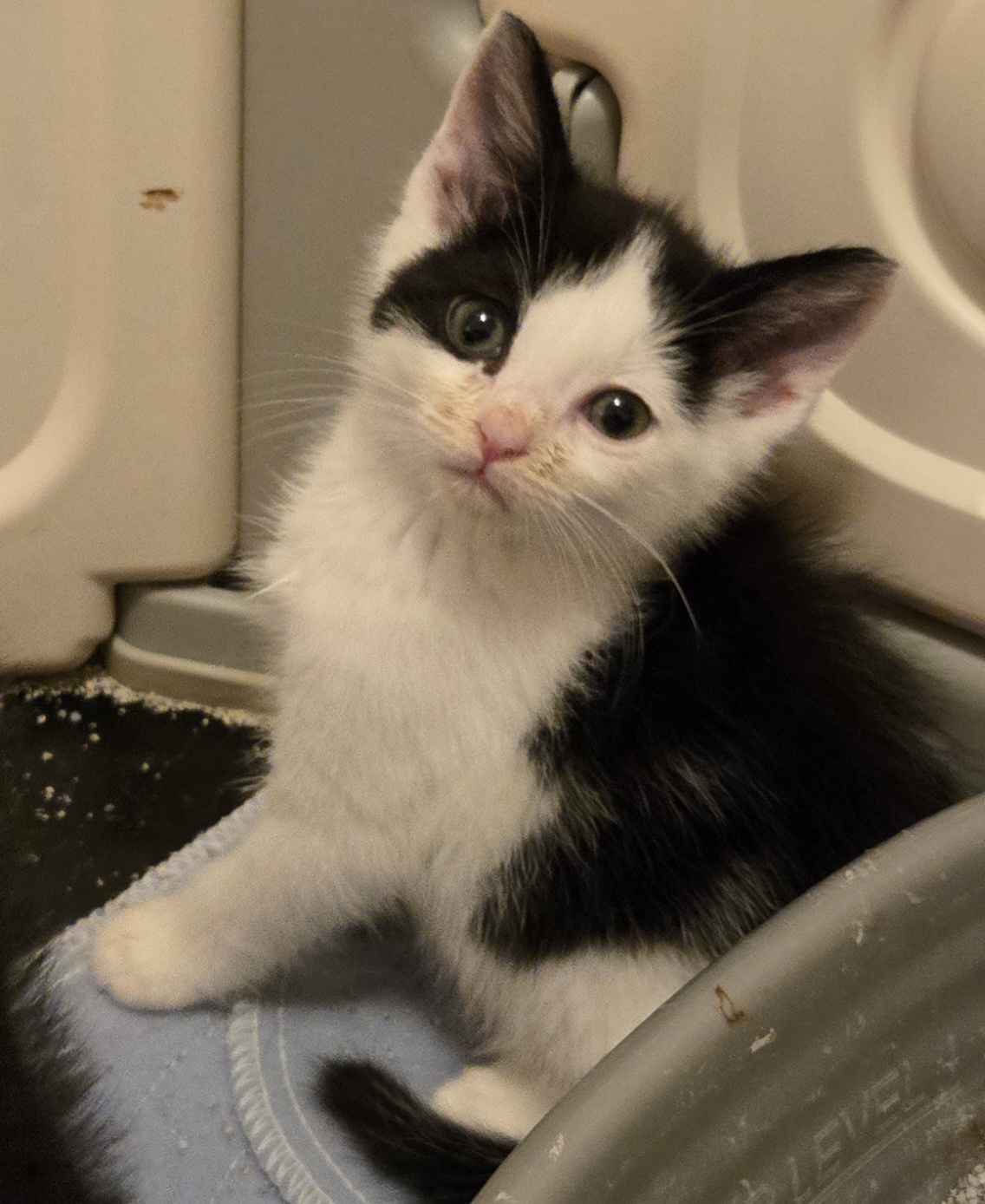
Lala's unusual movements are the first thing anyone notices. His head sways persistently, as if he's emphatically saying no, and when he gets excited he spins in circles—his foster describes it as adorable but exhausting. These movements stem from a vestibular or cochlear defect, likely a birth malformation, rather than the more common cerebellar hypoplasia. Because his inner ear structures are too small to be seen on imaging at his age, no surgical or medical fix is expected. That doesn't stop Lala from living life his way. He has his own workarounds: turning his back to the room and looking over his shoulder steadies him completely, and when he climbs into his foster's lap for pets, the sway stops. Attempts to stabilize his head with pool noodles or toddler socks only made him freeze, so the foster lets him be. He climbs low cat trees, but he is not fast, and his movements can mimic wounded prey. This means he would be vulnerable in a home with a high-prey-drive dog, but in a safe environment he is a happy, self-sufficient kitten.
Adoption rules: siblings required, no high-prey-drive dogs
Lala's adoption will require specific conditions. He should go to a home with one of his siblings or a playful resident cat—especially a sibling, because he leans on them for support while eating. A high-prey-drive dog is not recommended: Lala's movements mimic wounded prey, and he can't quickly get himself up and away from danger. He can climb low cat trees but isn't fast. His foster notes that he would need the right dog and right dog owners if any dog is present. Because he's a special-needs kitten, he needs an adopter who will let him "be the very best Lala he can be." The rescue will involve his foster parent in reviewing applications and meeting potential adopters to ensure a good match.
Foster parents shape adoption decisions
At Sophia L'Orange Kitten Rescue, the adoption process is far from impersonal. Rescue leader Jenia ensures that foster parents are included at every stage: they review each application, participate in virtual meetings with potential adopters, and provide first-hand accounts of a cat's personality, habits, and needs. For a special-needs kitten like Lala, this is essential. The foster knows exactly how he likes to eat, how he uses his siblings for support, and what kind of home would be safe for him—for instance, one without a high-prey-drive dog. This level of involvement gives adopters confidence and gives fosters a real stake in the outcome. The foster describes it as a deep sense of commitment and ownership, which is why she has kept eight cats and one 'very special' dog herself. Yet she can let most fosters go because she knows they are going to fully vetted, carefully matched families. Readers who want to participate can become foster volunteers themselves; the rescue relies on people like her to make this personalized matching possible.
Lala's affectionate nature and joyful spirit
Lala is a bundle of affection and resilience. When he settles into his foster's lap, the constant head sway disappears entirely—those petting sessions are his sanctuary. He is currently nine weeks old, steadily gaining weight and growing stronger each day. His foster is hopeful that as he matures he might gain some control over his head movements, but she's also prepared that this may be his permanent condition. Either way, Lala remains undeterred. He enjoys his meals (even if they leave his face needing a wipe), he plays cheerfully with his sisters, and he relishes every moment of human attention. His joyful nature is exactly why the rescue is seeking a very special adopter—someone who will embrace his unique way of moving and let him thrive without trying to change him. For the right family, Lala will not be a project but a loving companion who asks only for patience and warmth.
Compiled from published reference material: www.catster.com