Why Was Timmy the Turtle Swimming in Circles?
A 270-pound loggerhead rescued off Sugarloaf Key gave researchers a rare window into the hidden dangers that threaten sea turtles every day.
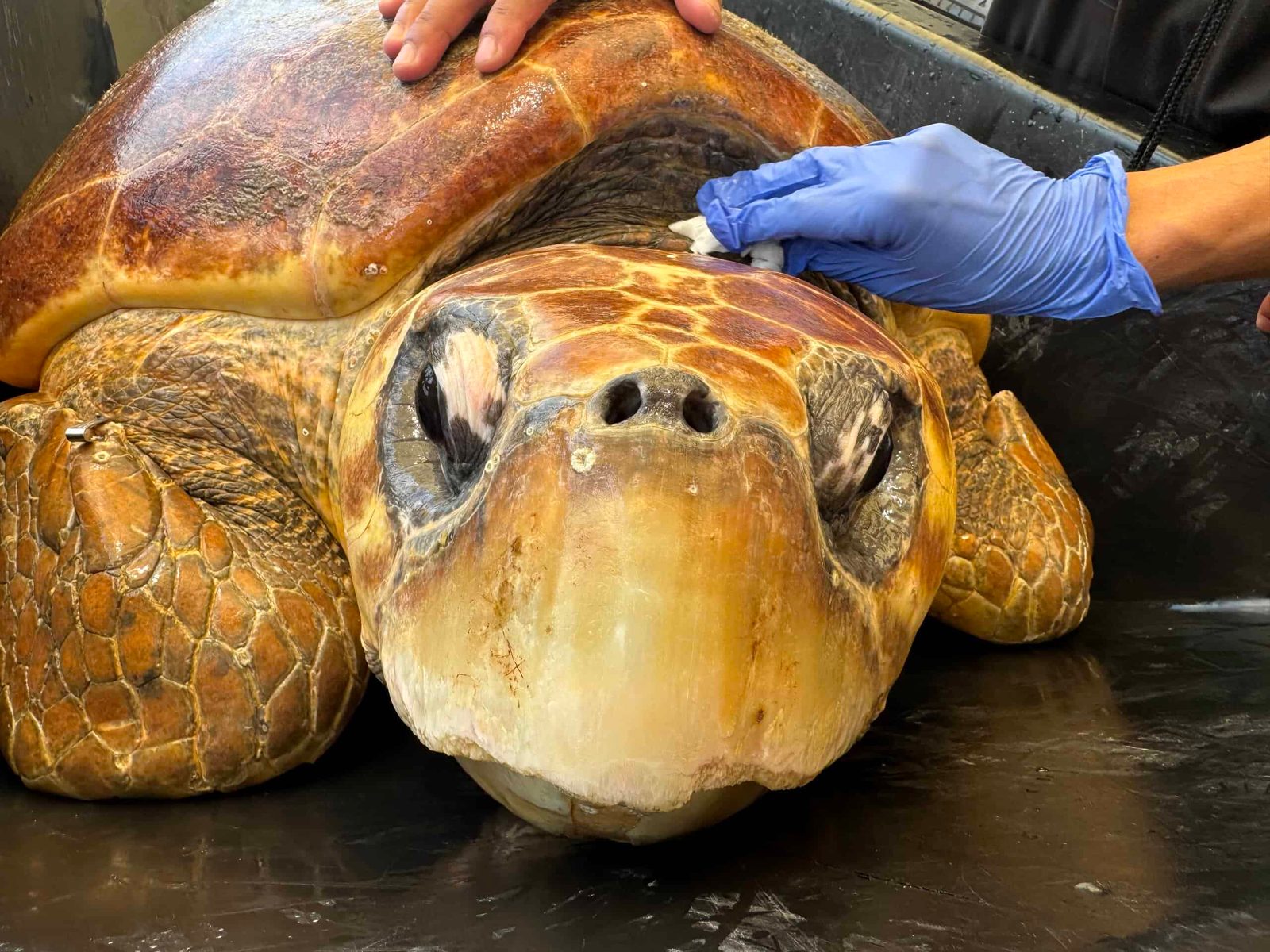
Why was Timmy the turtle swimming in circles?
Timmy was likely hit by a boat, but specialists couldn't rule out a mating interruption until they tested her blood. The Turtle Hospital in Marathon, Florida, received Timmy on July 19, 2026, nearly seven miles south of Sugarloaf Key, after the U.S. Coast Guard spotted her swimming erratically near the surface. Her blood plasma tested negative for biotoxins, eliminating toxic ingestion as a cause. Visible marks on her head and neck led manager Bette Zirkelbach, who has worked at the hospital since 2012, to suspect a blunt-force collision with a vessel. A mating encounter was also plausible: loggerheads sometimes appear to fight at the surface, but usually with a partner present, and a boat may have startled the male away. Once placed in a hospital tank, Timmy's behavior normalized within 24 hours, and her blood chemistry returned to normal limits, pointing to a temporary injury rather than a systemic illness.
What did Timmy's flipper tags reveal about her past?
Timmy's flipper tags, placed by Mote Marine Laboratory and Aquarium in Sarasota County, showed she had nested three times during the 2026 season, with her most recent nest laid on July 9—just ten days before her rescue. That reframed her erratic swimming: she was likely exhausted from nesting, and possibly involved in a mating attempt when an interruption occurred. The tags also helped estimate her age at between 70 and 80 years old, a remarkable span for a loggerhead. Weighing approximately 270 pounds, she had all four flippers intact and a carapace in good condition, indicating she had survived decades in the open ocean. That she was still actively reproducing at such an advanced age underscores how much is at stake when a single turtle is lost to a boat strike or plastic ingestion.
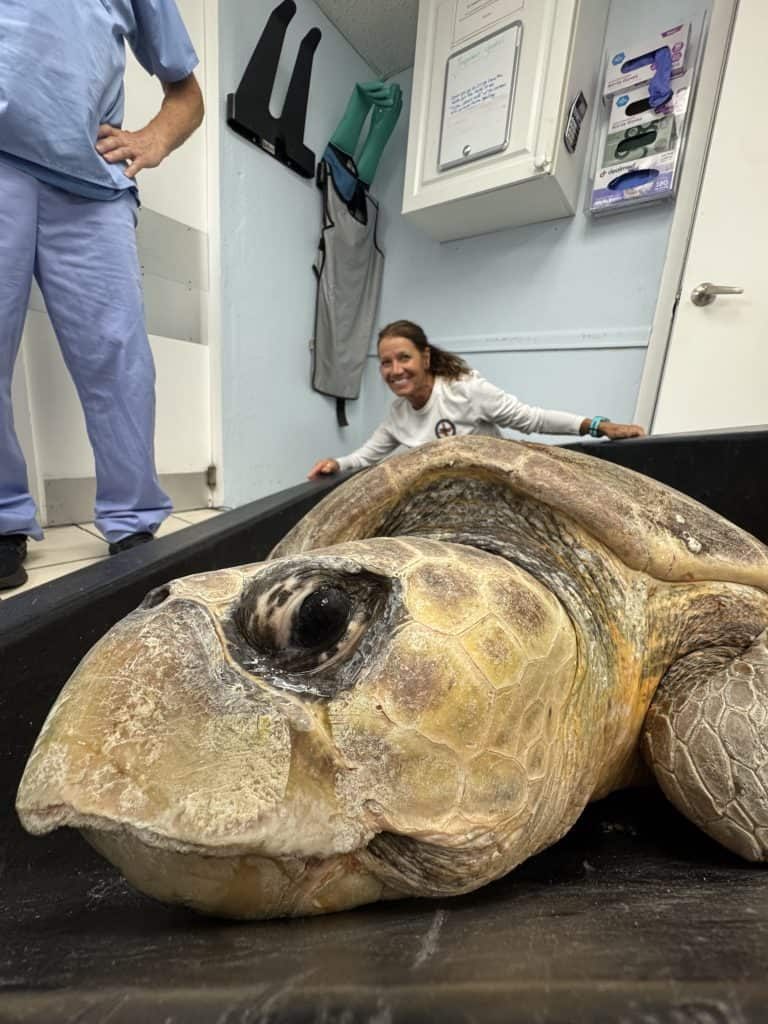
How does plastic pollution affect sea turtle hatchlings?
Plastic pollution is a lethal threat to sea turtle hatchlings. These opportunistic feeders consume whatever is in front of them, including tiny plastic fragments that mimic natural prey like jellyfish or algae. When their usual food sources are scarce, they turn to synthetic materials, which accumulate in their gastrointestinal tracts and cause impactions that prevent digestion and absorption of nutrients. Postmortem studies have found plastic in the guts of up to 93 percent of hatchlings, a stark measure of how pervasive human waste has become in the ocean. As Bette Zirkelbach, manager at the Turtle Hospital, points out, what goes into a trash can often ends up in marine environments, out of sight and out of mind. Each individual can make a difference by reducing single-use plastics, properly disposing of waste, and advocating for stronger pollution controls that keep debris from reaching the sea.
What kind of damage does a boat strike do to a sea turtle?
A boat strike can cause blunt-force trauma that damages a turtle's spinal column, as seen in a recent patient at the Turtle Hospital named Mini. Mini, an adult loggerhead, suffered spinal damage from a vessel and ultimately died despite rescue efforts. Unlike Timmy, whose head and neck marks suggested a glancing blow, Mini's injury was severe and irreversible. The Turtle Hospital has seen an increase in boat strikes this year, with Zirkelbach reporting as many as 40 turtles brought in in a single evening. Most of these collisions come from recreational vessels that may not even realize they hit a turtle. While some turtles recover with anti-inflammatory treatment and time, spinal injuries are often fatal—a sobering reminder of the price of a single propeller.
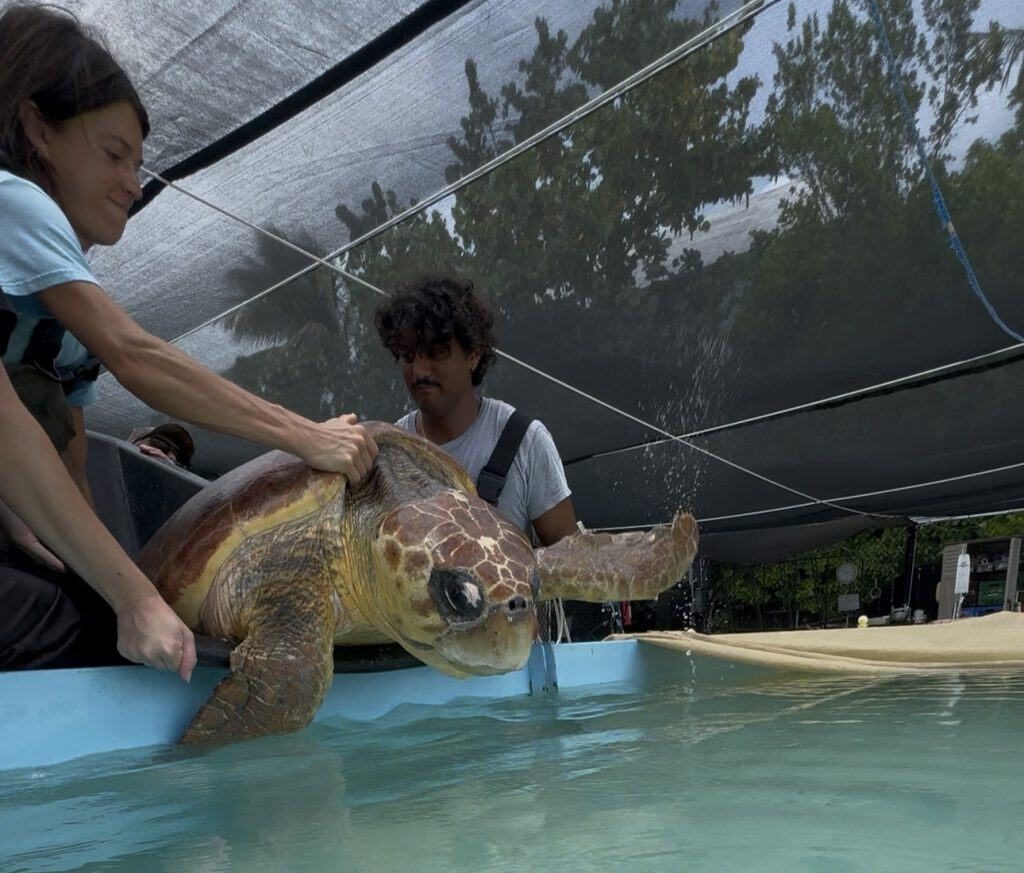
What happens to a sea turtle after it's rescued?
Rescued sea turtles are taken to facilities like the Turtle Hospital in Marathon, Florida, which has treated more than 3,000 turtles since it opened in 1986. Upon arrival, each turtle undergoes blood tests, a physical exam, and observation in a hospital tank. Timmy spent her first 24 hours behaving the way loggerheads typically do in a new environment, then settled down and ate everything offered. Once stable, she was moved to a larger 160,000-gallon tidal pool that provides a more natural habitat than a small tank, though it still doesn't mimic the deep ocean. The recovery process varies by injury: boat strikes may need rest and antibiotics, while plastic impactions can require surgery. The goal is always release back into the wild, but not every patient makes it—Mini's case demonstrates that even with prompt care, some injuries are too severe.
How many loggerhead sea turtles are left in the world?
An estimated 36,000 to 67,000 mature female loggerhead turtles nest worldwide, though some sources suggest the true number could be higher. These ancient mariners take 20 to 30 years to reach sexual maturity, and once they do, females return to the exact beach where they hatched to lay their eggs—only to find that coastal development has transformed their natal shores. Seawalls, condominiums, and beachfront lighting now block nesting sites and misdirect hatchlings away from the ocean, drastically reducing reproductive success. Compounding these land-based threats are ocean perils: boat strikes can cause fatal spinal injuries, fishing gear entangles turtles as bycatch, and plastic ingestion leads to impactions. Climate change further disrupts sex ratios by warming sand, which produces more females and fewer males.
How does climate change affect sea turtle gender?
Warmer sand produces more female sea turtles, while cooler nests yield more males, making climate change a direct threat to loggerhead populations. Sea turtles have temperature-dependent sex determination: the temperature of the sand during incubation fixes the sex of the hatchlings. As global temperatures rise, nesting beaches are becoming warmer, skewing the sex ratio toward females. This reduces the number of males available for mating, which can lower genetic diversity and the long-term viability of the species. Unlike adult turtles, which can relocate to cooler waters, hatchlings have no choice—their sex is sealed the moment the eggs finish incubating. Researchers monitor sand temperatures at nesting sites to predict future sex ratios, and the trend is worrying. Along with boat strikes and plastic, climate change adds another layer of pressure to an already imperiled species.
Why do female sea turtles return to their birthplace to nest?
Female sea turtles typically return to the beach where they hatched to lay their own eggs, a journey that takes 20 to 30 years from hatching to sexual maturity. But in that gap, coastal development can transform the natal beach into something unrecognizable. Timmy, for instance, had nested three times in the 2026 season before her rescue, likely returning to a stretch of sand she had known for decades. Bette Zirkelbach points out that when a female returns, she may find a seawall, a condominium, or no beach access at all. If her birthplace is gone, she may be forced to nest elsewhere, which can reduce reproductive success. Artificial lighting along the beachfront compounds the problem by redirecting hatchlings away from the ocean, so even a successful nest may lose its offspring before they reach the water.
Compiled from published reference material: a-z-animals.com