When a Swallowed Sock Becomes a Surgical Emergency: What Dog Owners Need to Know About Intestinal Blockage
Foreign-object ingestion is one of the top reasons dogs end up on an operating table — here's how the surgery works, what recovery looks like, and how to keep your dog out of the ER.
The 20-Minute Window Between Worry and Crisis
A dog can wolf down a sock, a rubber toy, or half a corn cob in the time it takes to unload the dishwasher. What follows is not always a wait-and-see situation. Studies in small-animal emergency medicine rank foreign-object ingestion as a leading cause of emergency abdominal surgery in dogs. The danger escalates when the object lodges in the intestines, cutting off blood flow to surrounding tissue. Once that tissue begins to die, the situation moves from uncomfortable to life-threatening. Puppies and habitual chewers — the dogs who treat rocks, underwear, and plush squeakers as a tasting menu — face the highest risk. Owners who recognize the speed of this progression are the ones whose dogs reach the operating table in time.
Inside the Operating Room: What the Surgery Actually Entails
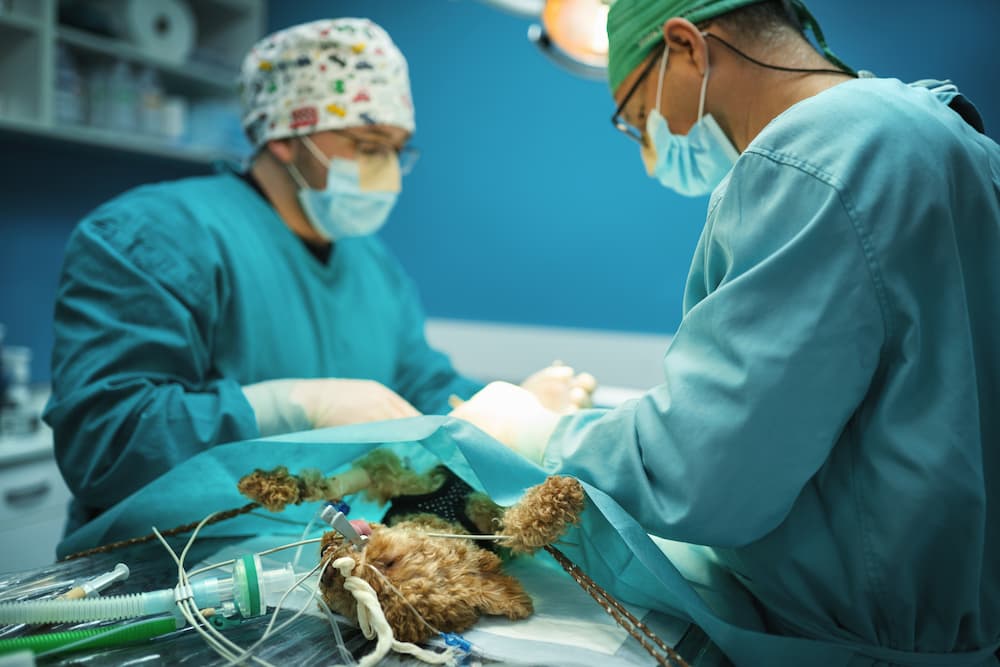
If imaging confirms a blockage, the veterinary team moves through a precise sequence. First comes stabilization: an intravenous catheter is placed, fluids correct dehydration, electrolytes are balanced, and pain medication is administered. For non-emergency cases, food is withheld beforehand to reduce the risk of aspiration under anesthesia. Once the dog is under general anesthesia and the abdomen is shaved and prepped, the surgeon makes an incision and begins an exploratory laparotomy — a careful manual survey of the abdominal organs to locate the obstruction. If the surrounding intestinal tissue is healthy, the surgeon may make a small enterotomy, extract the object, and close the incision. When tissue has died from lost blood supply, the damaged section is removed in a procedure called intestinal resection and anastomosis, where the healthy ends are sutured together to restore normal flow. The entire procedure typically lasts one to three hours depending on complexity.
Recovery: The Hospital Stay and the First Weeks at Home
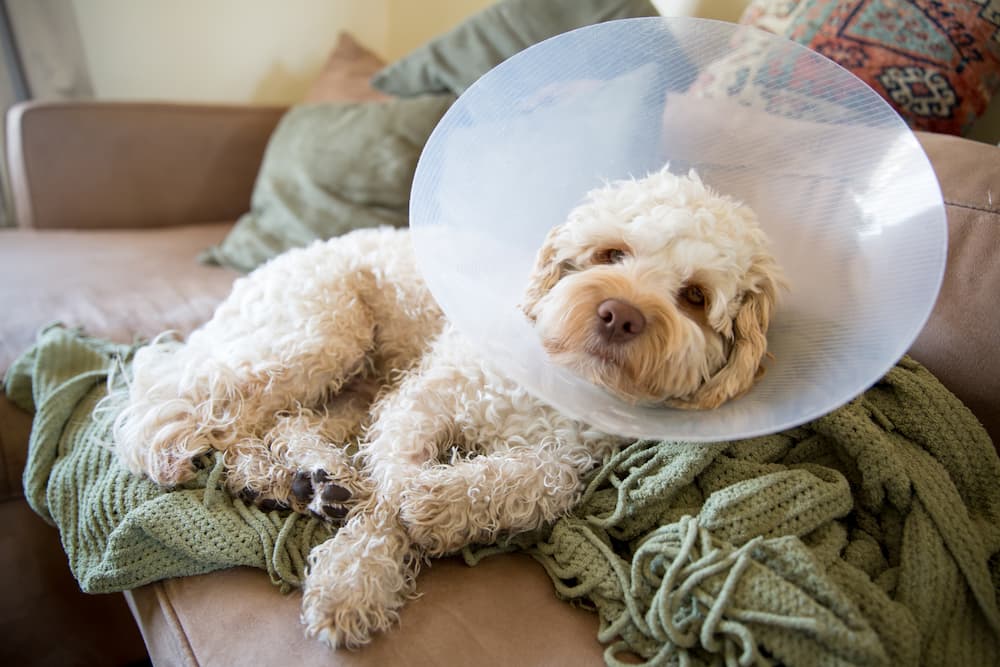
Post-surgical hospitalization usually spans several days. During that time the dog receives pain management, anti-nausea medication, and continued intravenous fluids. Staff monitor for complications such as leakage at the surgical site or signs of sepsis from compromised tissue. Once the dog can hold down small amounts of food and water without vomiting, discharge planning begins. At home, owners typically follow a restricted-activity protocol — no rough play, no stairs, no unsupervised roaming — for roughly two weeks while the abdominal incision heals. The survival rate for intestinal blockage surgery is generally favorable when the obstruction is caught and treated early, and most dogs return to their baseline energy and appetite within weeks.
The Financial Reality — and How to Prepare
Emergency abdominal surgery is one of the more expensive procedures a dog owner can face. Costs vary by region, clinic type, and surgical complexity — a straightforward enterotomy will carry a lower bill than a full resection requiring a multi-day ICU stay. The financial shock is compounded by urgency: owners rarely have time to comparison-shop when their dog is in distress. Pet insurance that covers accidents and emergencies can offset a significant portion of the bill for eligible claims. Third-party financing services such as CareCredit allow owners to spread payments over months rather than absorbing the full cost at once. The owners least likely to delay a critical surgical decision are those who have a financial plan in place before the emergency strikes.
Keeping Your Dog Off the Operating Table
Prevention is straightforward in concept and relentless in practice. Puppies and high-chew-drive breeds need constant supervision around small objects. Socks, underwear, and children's toys rank among the most commonly retrieved foreign bodies. Corn cobs are a seasonal spike — summer cookouts produce a predictable surge in obstruction cases. Secure trash cans with locking lids, crate-train young dogs during unsupervised hours, and rotate chew toys to reduce the novelty of household items. Teaching a reliable "drop it" and "leave it" command gives owners a critical interception tool in the seconds between a dog grabbing something and swallowing it. No household is perfectly hazard-proof, but the gap between a close call and a surgical emergency is usually a few seconds of vigilance.
Compiled from published reference material: www.greatpetcare.com