A Senior Stray's Unbroken Gaze Tells the Story of a Second Chance
Happy the black cat barely looks away from the owner who adopted her, and the quiet stare has become a lesson in what shelter cats give back.
A POV That Frames the Bond
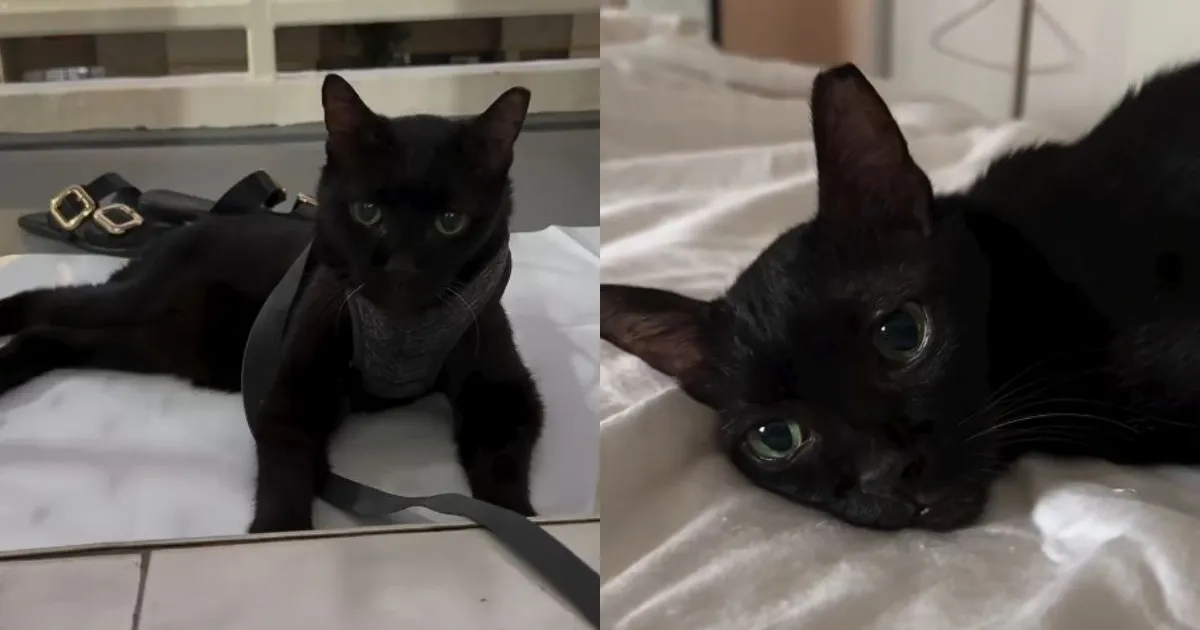
The video from @happypurrr opens with onscreen text: 'POV: you adopted a senior stray who won't stop looking at you like this.' That framing makes the viewer the adopter of Happy, a black senior stray, who responds with an unbroken gaze from her owner's lap. One viewer interpreted the look as a plea: 'He is asking you to not leave him ever, ever in any situation.' The clip is a series of quiet moments, each holding the same fixed stare and the comfort of a cat who has finally settled in.
The Black Cat Adoption Gap
Happy's coloring is part of the story. Black cats are statistically less likely to be adopted from shelters, and they wait longer for homes than cats of other colors. The reasons are anecdotal but persistent: some adopters say black cats do not photograph well, while others carry old superstitions about dark fur. Bombay cats, a breed that is nearly all black, seem to defy the trend. One commenter on Happy's clip shared a personal note: "Bombay cats are the sweetest… I recently adopted one and he's the sweetest and funniest." The comment underscores what shelters have long observed — coat color says little about temperament and nothing about a cat's capacity for affection.
Why Older Cats Turn Out to Be the Easy Ones
Senior strays like Happy come with their personalities already formed. An older cat that has lived on the street knows what it wants, and once it decides a human is safe, the loyalty is often immediate. Kittens require constant supervision and training; a senior cat is past the destructive phases and usually settles into a home routine quickly. The trade-off is the shorter runway — adopters get fewer years, but the ones they get are often marked by an intensity of gratitude that younger animals rarely display. Happy's owner has not shared how long she has had the cat, but the clip suggests a relationship that has already found its rhythm. The gaze is the evidence.
A Wordless Thank You
Happy's unwavering eye contact works as a non-verbal thank you for her second chance. The way she curls up, completely at ease, signals that this home gives her the safety and comfort she missed as a stray. Viewers saw that meaning in her stare, with one writing, 'I still cannot believe you choose me, thank you.' Another summed up the sentiment: 'I think loving the unloved is the point of life.' The steadiness of her gaze becomes the clearest measure of the bond.
The Second Chance Works Both Ways
The comments on Happy's clip frame adoption as a one-way rescue, but the arrangement is mutual. The owner who films the stare gets proof, every day, that her presence matters to another creature. Happy gets the lap, the food, and the safety she missed. The viewer comment that loving the unloved is the point of life sums up the exchange from the human side. From the cat's side, the point might be simpler: the person who chose her, at her age, in her color, is worth watching. The clip does not need a voiceover or a soundtrack. The stare carries the whole story in one long, unbroken look.
Compiled from published reference material: cattime.com