Once-a-Day Feeding: A Boon for Some Dogs, a Risk for Others
Bloat in large breeds, a benefit from the Dog Aging Project, and the needs of puppies and small dogs show why meal frequency isn't one-size-fits-all.
A Single Big Kibble Meal Raises Bloat Risk in Large Breeds
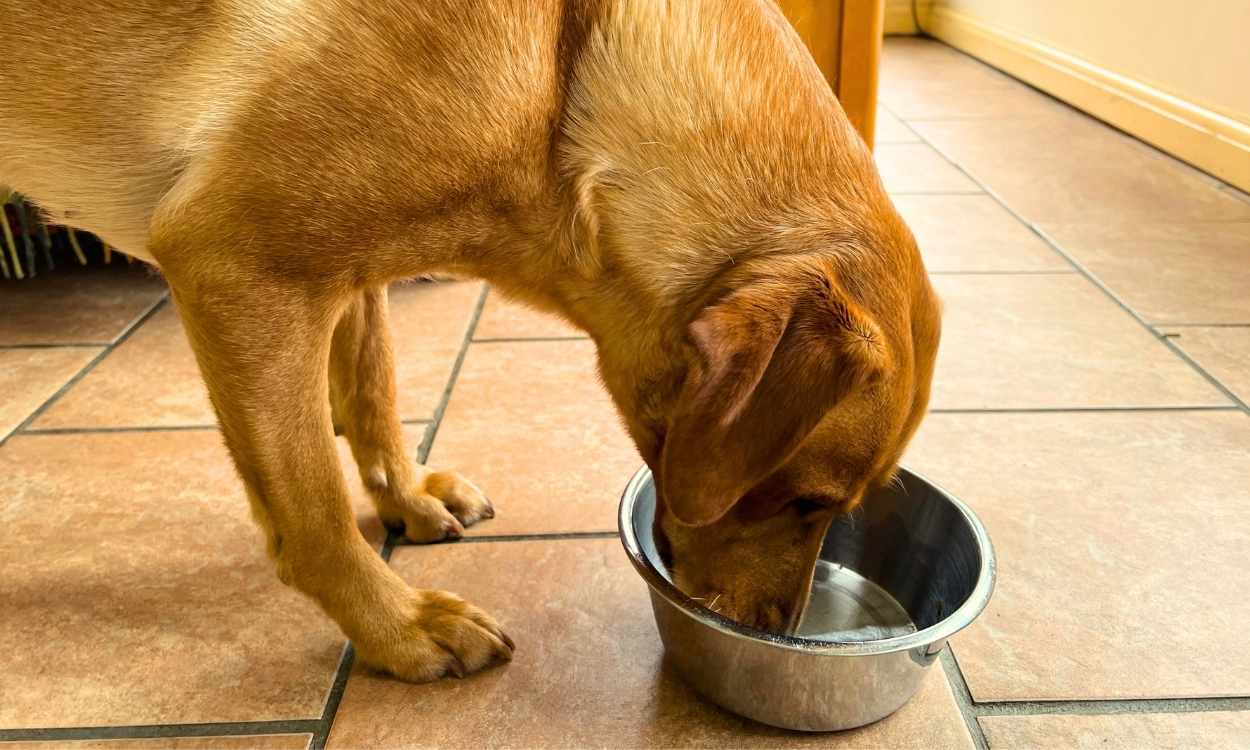
A large or deep-chested dog fed once a day gets its entire kibble ration in a single bowl. Dry kibble is dehydrated, so it expands as the dog drinks, turning a modest serving into a heavy, bulky mass in the stomach. Combined with the naturally wide, deep chest of breeds like Labradors and Great Danes, this extra bulk raises the risk of bloat—a life-threatening condition where the stomach twists on itself. Splitting the same daily amount into a morning and evening meal halves the stomach load and is the standard safeguard. Small dogs do not face this specific risk, as their stomachs manage the smaller volume without the same anatomical pressure. The message is clear: for large breeds on dry food, two meals are safer than one, even if the total calories are identical.
Dog Aging Project Links Once-a-Day Feeding to Better Health
Since 2019, the Dog Aging Project has tracked thousands of companion dogs, and its data shows an association between once-daily feeding and a lower incidence of several health issues. The study does not claim that one meal causes better health. Owners who feed once a day may also practice calorie restriction, which separate research has linked to longevity. The finding stands as a signal, not a prescription. For an owner trying to decide, the study adds weight to the idea that a single daily meal is not harmful for healthy adult dogs, especially those on raw diets. It also highlights how little we still know about meal frequency and aging. The project is ongoing, and future analysis may clarify whether the meal schedule itself matters or whether other habits of once-a-day feeders drive the benefit.
Small Dogs Under 20 Pounds Often Vomit When They Miss a Morning Meal
Dogs weighing under about 20 pounds frequently do poorly on a once-a-day schedule. The Labrador Site's own Jack Russell terrier, for example, will vomit if she misses her morning meal—a common pattern among small breeds. Their small stomachs struggle to hold a full day's ration in one sitting, and they may not eat enough to maintain weight. This applies to both raw and kibble diets. Splitting the daily portion into two meals allows a small dog to eat what it needs without discomfort. The 20-pound threshold is a useful benchmark; below that, twice daily is the practical minimum for most dogs. Owners of toy breeds or mixes should watch for signs of nausea or weight loss when switching to once daily.
Puppies Need Four Meals a Day Until Three Months Old
Puppies cannot handle a once-a-day schedule. Most kibble-fed puppies need at least four meals a day until they reach three months old, then three meals a day until six months. Raw-fed puppies can sometimes drop a portion a bit sooner, but they still require more frequent feeding than adults. The reason is their rapid growth and small stomach capacity. A puppy fed once daily risks hypoglycemia and uneven nutrition. The schedule applies across breeds, but smaller breeds may need the higher frequency longer. After six months, most puppies can transition to two meals, but not to one until they are fully grown. The Dog Aging Project data does not apply to puppies, as it focuses on adult dogs. The key: follow the age-based meal counts rather than a one-size-fits-all rule.
Kibble's Bulky Fillers vs. a Carnivore's Digestion
Kibble's bulky fillers make it a heavier task for a dog's digestion than raw foods. A dog's digestive system is naturally built for raw meaty bones, organs, and other whole foods that pass through quickly with little waste. Kibble, with its fillers and carbohydrates, is a different task—it sits heavier and takes longer to process. For large or deep-chested breeds, which are more prone to bloat, feeding the entire daily ration in a single meal means the stomach has to cope with twice the volume at once. This can be risky. Splitting the same daily amount into two meals does not change the total calories, but it halves the volume the stomach has to deal with at any one time. That simple practice gives a kibble-fed dog's digestion a lighter load and reduces the risk of an oversized, swollen stomach. For owners of large or deep-chested kibble-fed dogs, this is a straightforward adjustment that supports better digestive comfort.
Wolves Feast and Fast, but Dogs Have Scavenged for Small Meals
Dogs are genetically almost identical to the wolves from which they descend. Wild wolves hunt in groups, bring down large prey, and feast heavily, then go without food for a day or two. That evolutionary history is why once-daily feeding feels 'natural' to many owners. But dogs have also scavenged alongside humans for thousands of years, catching small prey and eating leftovers, and their digestive systems have adapted to smaller, more frequent meals. This means a dog can handle either schedule. The choice depends on the food. A raw diet of meaty bones and organs passes through quickly with little waste, so a large meal is fine. Kibble, with its fillers and carbs, is bulkier and slower to digest. The key is that dogs are flexible eaters, not fixed to one pattern.
Raw Diets Digest Fast Enough for a Once-a-Day Feeding
Raw diets—meaty bones, organs, eggs, and even invertebrates—are processed quickly by a dog's digestive system. The system is perfectly designed for this food, which contains no fillers or carbs and generates little waste. This makes a once-daily feeding schedule safe and satisfactory for most medium to large dogs. Historically, adult dogs were fed this way: they would eat a large meal and then fast for many hours, a pattern matching their carnivorous nature. Wild wolves and group hunters feast on a large prey animal and then go a day or two without eating. While domestic dogs have also adapted to smaller, more frequent meals over thousands of years of scavenging, a large raw meal is still handled efficiently. For a Labrador or similar large breed, a single evening meal is practical and mimics that natural feast-and-fast cycle. However, small dogs under about 20 pounds may struggle to consume enough in one sitting and can feel unwell without a morning meal. Even raw-fed puppies may need more frequent portions, though some can drop a meal earlier than kibble-fed pups. If you feed raw, consider once daily for an adult medium or large dog, but watch your dog's energy and weight to ensure it thrives.
A Kibble Meal Is Over in Five Minutes—a Raw Bone Lasts Half an Hour
Most dogs polish off a bowl of kibble in under five minutes. A raw meaty bone, in contrast, can keep a dog happily occupied for half an hour or more. That difference is not trivial. For a dog, eating is a major source of pleasure, and the anticipation of a meal is part of the reward. A once-daily kibble meal means that entire pleasure is compressed into five minutes, followed by 24 hours of waiting. Feeding the same daily ration in two meals doubles the number of enjoyable eating sessions. Each meal gives the dog something to look forward to, and the act of chewing a raw bone also provides mental stimulation and satisfies a natural urge. While two meals deliver the same total calories as one, the quality-of-life benefit is clear. A dog that eagerly awaits both breakfast and dinner is getting twice the daily dose of excitement. For owners who want to maximize their dog's happiness without changing nutritional intake, splitting the ration into two meals is a simple and effective choice.
Compiled from published reference material: www.thelabradorsite.com