Muzzle Training: The Safety Skill Every Dog Owner Overlooks
A $15 first-aid tool can prevent bites and reduce panic during emergencies, vet visits, or unexpected stress.
Even the Gentlest Dog Can Bite When Injured or Terrified
Emergency situations like a dog fight, a car accident, or severe pain can turn any dog defensive. Having a muzzle on hand—and a dog trained to wear it—adds a layer of safety without adding stress. Quality muzzles cost under $15 and fit easily in a first aid kit.
Public Transit, Grooming, and Other Muzzle-Required Moments
City buses in places like San Francisco and New York often require muzzles for dogs. Groomers and veterinarians use them during nail trims, blood draws, or vaccinations. For dogs that eat rocks, socks, or feces, a muzzle can prevent costly surgery. Muzzles are also advised for reactive dogs that can behave unpredictably, fearful dogs, or dogs who get grabby when running with others. They are crucial for new dogs with a bite history or during behavioral modification training to prevent incidents, and for introducing dogs with unknown behaviors. In painful situations, such as after a dog fight or being hit by a car, a muzzle can prevent biting due to extreme stress or pain. Making muzzle wearing familiar through prior training helps avoid adding stress in these already unpleasant scenarios.
Sleeve Muzzles: Quick On, Quick Off for Vet Emergencies
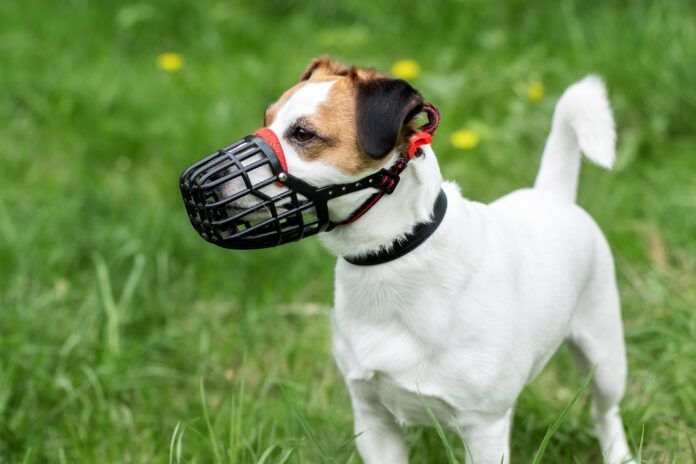
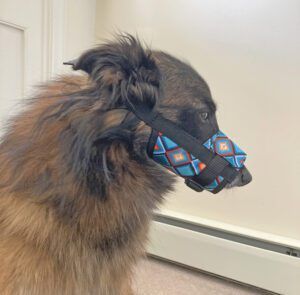
Sleeve muzzles are fabric or mesh tubes that buckle behind the ears. They restrict panting, drinking, and eating, so use only for short procedures like a vaccination. Their compact size makes them perfect for a glove compartment or hiking pack. Because they do not cover the end of the snout, a dog wearing a sleeve muzzle may still be able to nip, though she will not be able to do serious damage — which is why veterinary facilities and groomers reach for them during quick, stressful procedures such as blood draws and nail trims. You may even be able to slip a small treat through the opening, which can help keep a nervous dog distracted. To fit one, measure the circumference of your dog's muzzle near her eyes and choose a size that sits snugly without squeezing. The head strap buckles behind the ears and tightens to hold everything in place. A basic sleeve muzzle adjusts only along that head strap, but some models also adjust around the snout itself, allowing a more customized fit. Not every dog is a candidate: breeds with extremely short faces, such as Bulldogs, French Bulldogs, and Boston Terriers, may not be able to wear a sleeve muzzle at all. Keep in mind that even the sweetest dog can bite when stressed or in extreme pain, and a quality muzzle costs under fifteen dollars — inexpensive insurance to have tucked inside your dog's first aid kit.
When to Reach for a Basket vs. a Sleeve
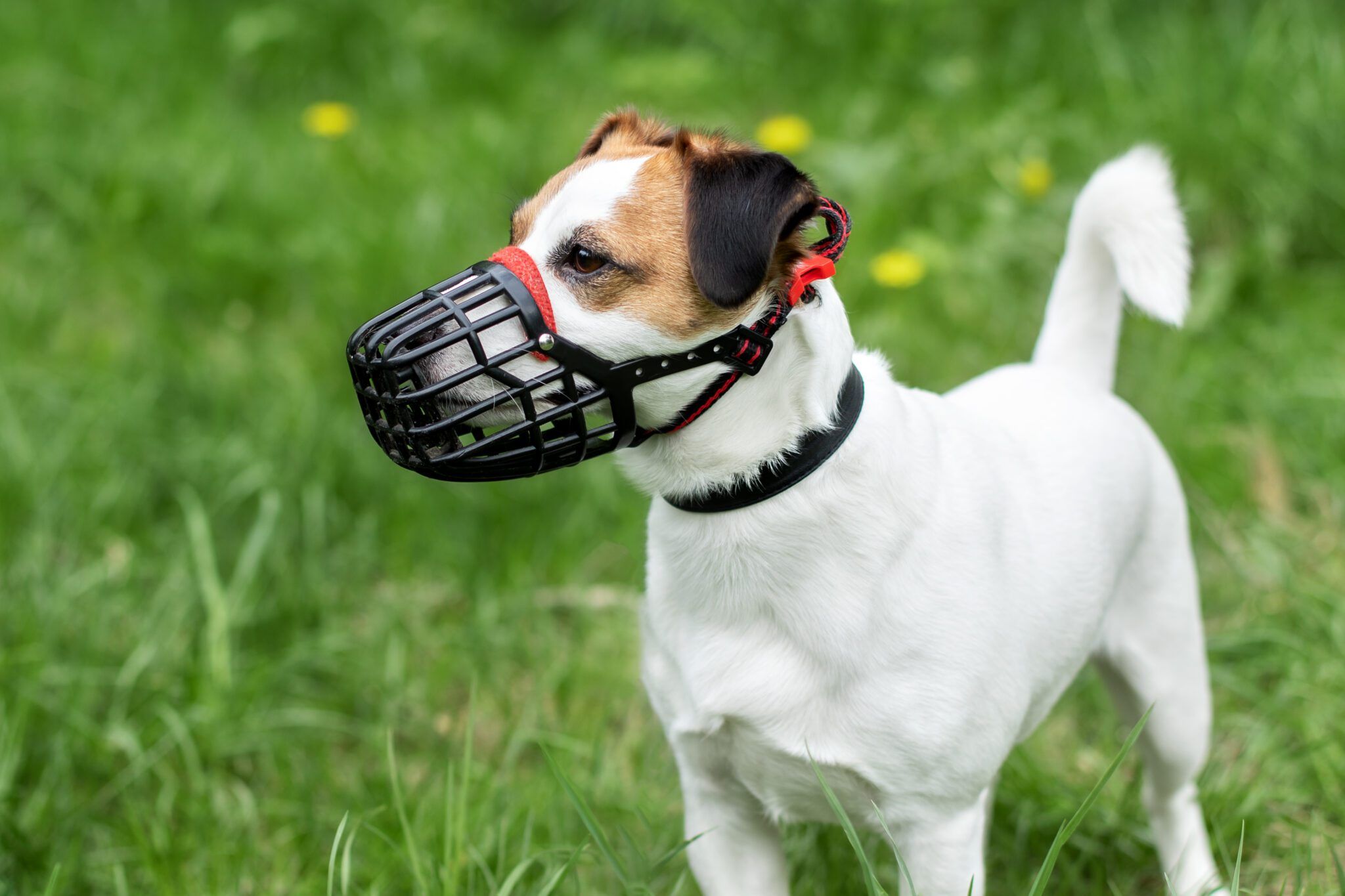
Choose a basket muzzle for any situation lasting more than a few minutes, like a reactive dog on a walk or behavioral training. Sleeve muzzles are for one-off emergencies, such as a frightened dog at the vet. Basket muzzles with tighter lattices also stop scavenging during walks.
Fitting a Basket Muzzle: Match Your Dog's Head Shape
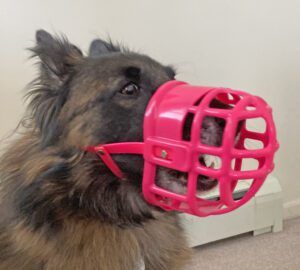
Dogs with long, narrow heads like Greyhounds need different basket muzzles than breeds with blocky heads like Bullmastiffs. Measure the snout length and circumference; the basket should sit just beyond the nose tip. A forehead strap helps secure the fit and prevents pawing. Ideally, the basket should be wide enough that it isn’t squashing the cheeks and lips but narrow enough that your dog can’t wedge a paw inside. Try muzzles on your dog in person if possible or look for one that has photos showing a dog similar in head shape to yours. If your dog is between sizes based on measurements, it is usually best to size up.
Measuring for a Sleeve Muzzle in Under a Minute
Wrap a tape measure around your dog's muzzle near the eyes for a snug, non-squeezing fit. Most sleeve muzzles adjust only at the head strap, but some offer snout adjustments. Flat-faced breeds like Bulldogs or Boston Terriers often cannot wear standard sleeve muzzles.
Start Muzzle Training with High-Value Treats and Patience
Introduce the muzzle gradually: let your dog sniff it, then feed treats through the basket or sleeve. Practice short wears during calm moments, building up to 10-minute sessions. Training should begin before an emergency to ensure the muzzle feels familiar. To ease the process, treat muzzle training as a fun trick rather than a chore, similar to teaching your dog to wear a hat or carry a bucket. Allow your dog to investigate the muzzle by sniffing and eating treats while you snap and unsnap the buckle to acclimate her to the sound. Proceed through each step only when your dog is relaxed, as rushing can increase stress. Basket muzzles are ideal for this training since they allow your dog to pant and eat treats, enhancing reward-based learning. Sleeve muzzles, while useful for emergencies, may limit treat access, so keep sessions brief with them.
Store Your Muzzle Where You'll Actually Find It
Keep a sleeve muzzle in your car's first aid kit for unexpected vet trips. A basket muzzle can hang by the leash for daily use if needed. Investing in one now avoids scrambling during a crisis, and basic models start at around $12.
Muzzle Training Turns Panic into Procedure
When a dog is already stressed by injury or fear, a strange muzzle adds another layer of anxiety. Familiarity through training makes muzzling a non-event, allowing you to focus on the actual problem. Every responsible owner should own at least one muzzle per dog.
Compiled from published reference material: www.whole-dog-journal.com