Living With a Disabled Cat: What Actually Changes — and What Doesn't
From one-eyed rescues to blind and deaf companions, disabled cats adapt in ways that often surprise their owners — but their environments need to meet them where they are.
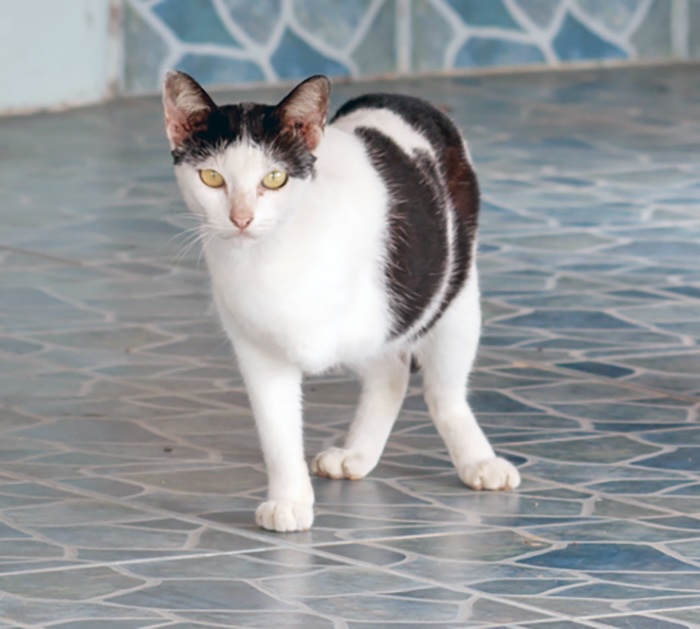
The Cat Who Lost an Eye Still Has Everything That Matters
A cat missing one eye lives, by most measures, a completely ordinary life. Its depth perception narrows, sure, but cats already rely heavily on whiskers, hearing, and scent to navigate the world — a second eye is more redundancy than necessity. The one firm rule: these cats belong indoors. A single eye means slower reaction time to predators, cars, and neighborhood dogs, and the margin for outdoor error drops to zero. Beyond that, no ramps, no special dishes, no schedule overhaul. The cat jumps on the counter, knocks things off the table, and ignores you at dinnertime exactly the way it always did. The adjustment period for the owner is usually longer than the adjustment period for the cat.
Three Legs, Zero Apologies
Most tripod cats lose a limb to injury, infection, or a congenital condition, and the recovery window is typically measured in weeks, not months. Once healed, a three-legged cat runs, jumps to elevated surfaces, and chases toys with a drive indistinguishable from that of a four-legged cat. Owners may need to add a low-entry litter box during the post-surgical period and keep food and water on the same floor as the main living area while the cat rebuilds confidence. That said, repeated jumping from high perches can strain the remaining joints over time, so providing intermediate stepping platforms — a chair beneath a windowsill, a shelf between the floor and the cat tree — helps distribute wear. Weight management becomes more important with one fewer leg to share the load.
When the Disability Is Invisible: Blindness and Deafness
Blind cats map their home through scent and sound, and they do it fast. Keeping furniture in a stable layout is the single most impactful thing an owner can do; every rearrangement forces the cat to rebuild its mental floor plan from scratch. Scent markers — a drop of vanilla extract on door frames, textured mats at room thresholds — give a blind cat fixed reference points. Deaf cats, meanwhile, respond to vibration and visual cues: stomping on the floor to get a cat's attention, flicking a light switch to signal dinnertime, or using hand signals during play. Neither condition prevents a cat from living a full, engaged indoor life, but both require the owner to communicate differently. A deaf cat will not hear an approaching child or a barking dog; a blind cat will not see a door left ajar. Supervision shifts from optional to essential.
Partial Paralysis and Mobility Aids
Cats with partial paralysis — often from spinal injury, nerve damage, or a condition affecting the hind legs — present the most complex care scenario. Some retain enough function to walk with a wobbly gait; others use custom-fitted rear-wheel carts that a veterinary rehabilitation specialist measures and orders. Litter box access becomes a logistical question: low-sided boxes or disposable pads placed on easy-to-clean flooring replace standard high-walled trays. Bedding needs to be checked and changed more frequently because a cat that cannot reposition itself is more vulnerable to pressure sores, particularly on the hips and hocks. Physical therapy exercises, taught by a veterinary rehabilitation professional and performed at home, can maintain muscle tone and prevent contractures. The daily time commitment is real — owners managing partial paralysis often describe it as closer to a routine than a task.
Indoors Only — But Not a Prison Sentence
Every disabled cat, regardless of diagnosis, should live exclusively indoors. The risks outside — traffic, predators, toxins, other animals — multiply when a cat cannot see, hear, or move at full speed. That does not mean fresh air is off the table. A catio — an enclosed outdoor structure attached to a window or door — lets a cat experience sunlight, breeze, and birdsong without exposure to harm. Pre-built catios range from window-box units at a few hundred dollars to walk-in enclosures that run into the thousands; many owners build their own with lumber and galvanized wire mesh. Even a screened balcony with a secure barrier can serve the purpose. The point is enrichment, not confinement. A blind cat in a catio smells the garden. A three-legged cat climbs a ramp to a shelf and surveys the yard. The disability sets the terms; the owner builds around them.
Compiled from published reference material: www.catwatchnewsletter.com