From Shadows to Sofas: A Feral Mama Cat's Pivotal Shift to Trust
A solitary mother cat's gradual introduction of her litter to a human home led to two brothers, Chips and Gray, finding a forever family and their mother being spayed.
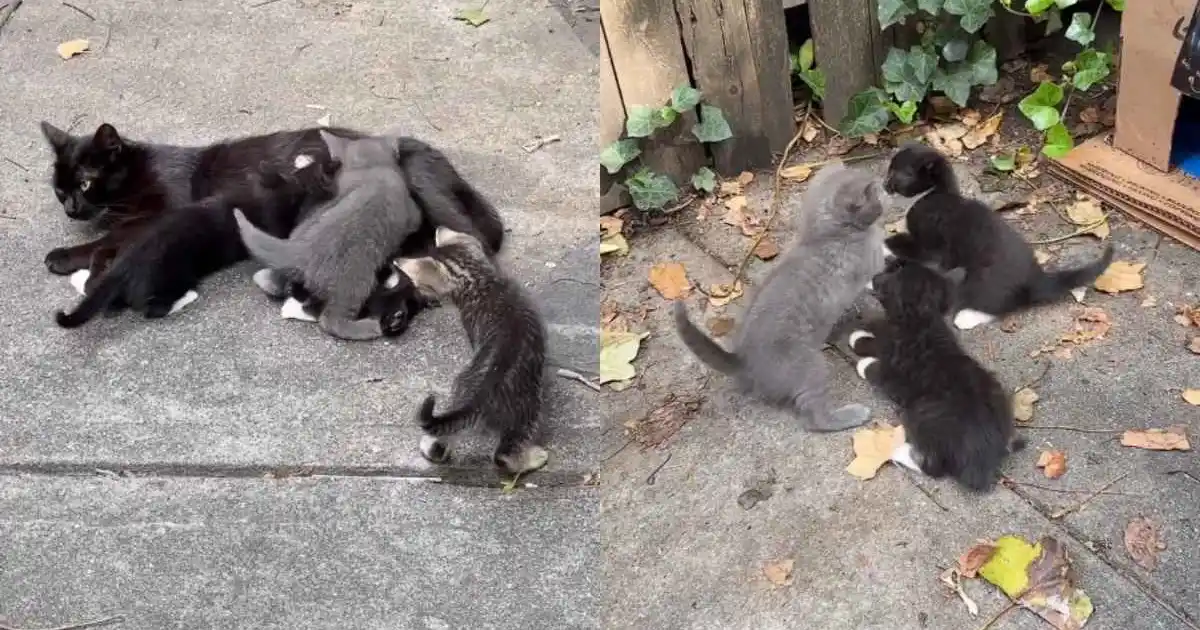
The Unseen Beginning: Raising a Litter Alone
Outside a family's house, a feral mother cat managed her litter entirely on her own, a scene of instinctual resilience. She navigated the challenges of raising kittens without human intervention, relying on the environment for shelter and sustenance. This solitary existence, documented in a video shared by @cabbages.world, established a baseline of wildness before an unexpected trust began to form. The family observed her from a distance, noting her dedication but wary of approaching. This initial phase highlights the common reality for feral cat colonies: survival often depends on evasion, not connection. For owners encountering similar situations, recognizing this baseline of fear is the first step toward intervention, where providing consistent, passive presence can signal safety.
The First Steps Toward Trust
The turning point arrived when the mother cat began guiding her curious kittens closer to the house she had learned to trust. Text from the Instagram video states, "One day our favorite feral cat showed us her kittens." This deliberate introduction wasn't immediate; it was a gradual process where the family allowed proximity without intrusion. Over days, the kittens, driven by natural curiosity, started venturing from their hiding spot toward the front doorstep. Their explorations involved playing and investigating the new surroundings, a key developmental stage. This behavior shift from concealment to engagement is a critical health and socialization signal. Owners can apply this by observing similar cautious approaches, using quiet consistency to encourage feral or shy cats to associate human spaces with safety.
Forever Homes for Brothers Chips and Gray
Two of the kittens, named Chips and Gray, were adopted by the observing couple, transitioning permanently into indoor life. Described as "two brothers and best friends," they adjusted swiftly to their new home, as noted by the creator who shared they have "been very comfy ever since." Despite their indoor adoption, they still enjoy time outdoors, reflecting their retained connection to their origins. This successful placement demonstrates how early, gentle exposure to human environments can ease the adoption process. The other two kittens found homes together as a pair, emphasizing the value of keeping bonded pairs or siblings together to reduce anxiety during the transition to domestic settings.
Spaying: A Responsible Conclusion to the Cycle
A crucial update in the story is that the mother cat was spayed, a vital health intervention that prevents future litters and contributes to population control. The family confirmed this in the video's caption, alongside the adoption of all kittens. Spaying offers long-term health benefits, such as reducing the risk of certain cancers, and is a fundamental aspect of responsible pet ownership. For owners of outdoor or community cats, arranging spaying is a proactive step that addresses both individual welfare and broader ecological concerns. This action transformed the narrative from one of endless reproduction to sustainable care, closing the loop on the family's initial observation.
Actionable Insights for Today's Cat Owners
This journey offers practical lessons: gradual trust-building through consistent, non-threatening presence is key for shy or feral cats. Feeding should be approached with patience, using high-quality food placed at a safe distance to build positive associations. Training, in this context, involves socialization—letting kittens explore at their own pace, as Chips and Gray did from doorstep to sofa. Health signals to watch for include a mother cat's willingness to bring her young near humans, indicating trust, and the kittens' exploratory behavior, which shows development. While no specific breed is mentioned, many feral cats are domestic shorthairs, and their adaptable nature can aid in rehabilitation. Spaying remains a non-negotiable health measure, as demonstrated by the mother cat's outcome, ensuring a healthier life for all involved.
Compiled from published reference material: cattime.com