A Flashlight in the Marsh Revealed a Lost Osprey — and a Rescue That Brought Him Home
When a fledgling osprey turned up alone at Mount Sinai Harbor, two rescuers weighed the risks of interference against the dangers of leaving him on the ground.
The Call That Came After Dark
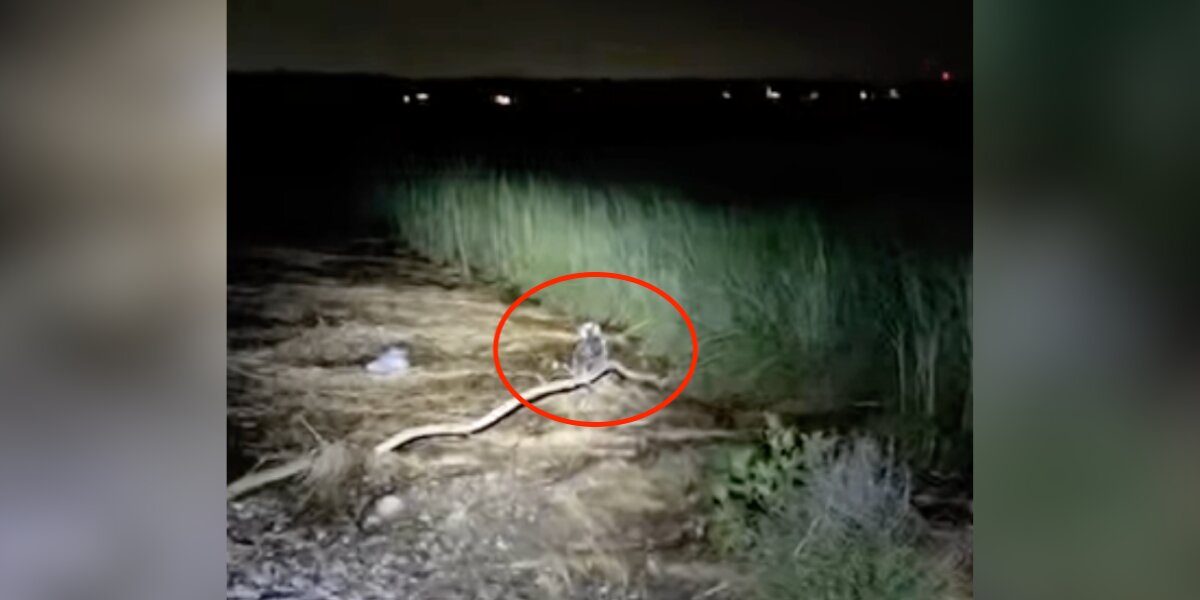
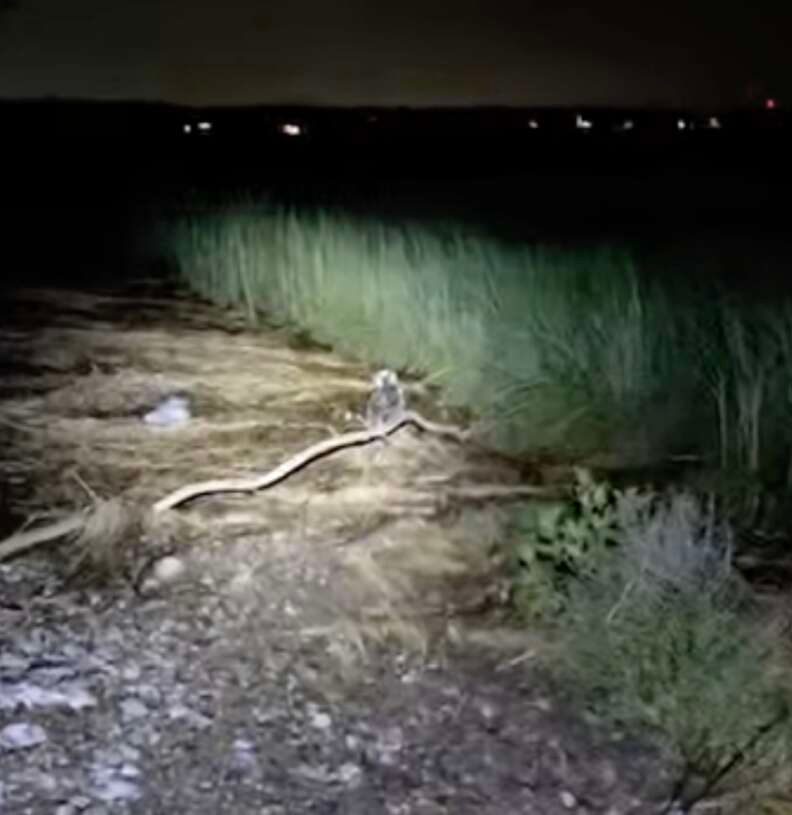
Residents of Mount Sinai Harbor, a beachfront community in Brookhaven, New York, spotted the bird struggling along the shore as evening set in. They called Jaeger's Run Animal Rescue, and within the hour, rescuer Lisa Jaeger and raptor specialist Bobby Horvath were picking their way through the marsh grass with a flashlight. The beam caught a young osprey perched on a low branch, motionless and alone. Above, silhouettes moved in a nest high in the trees — the bird's family, still active, still circling. Jaeger and Horvath had come prepared for a quick capture, but the scene gave them pause. The tide was coming in, and the bird showed no sign of taking flight. Every minute on the ground increased the odds that a raccoon or fox would find him first.
A Fledgling in a Precarious Spot
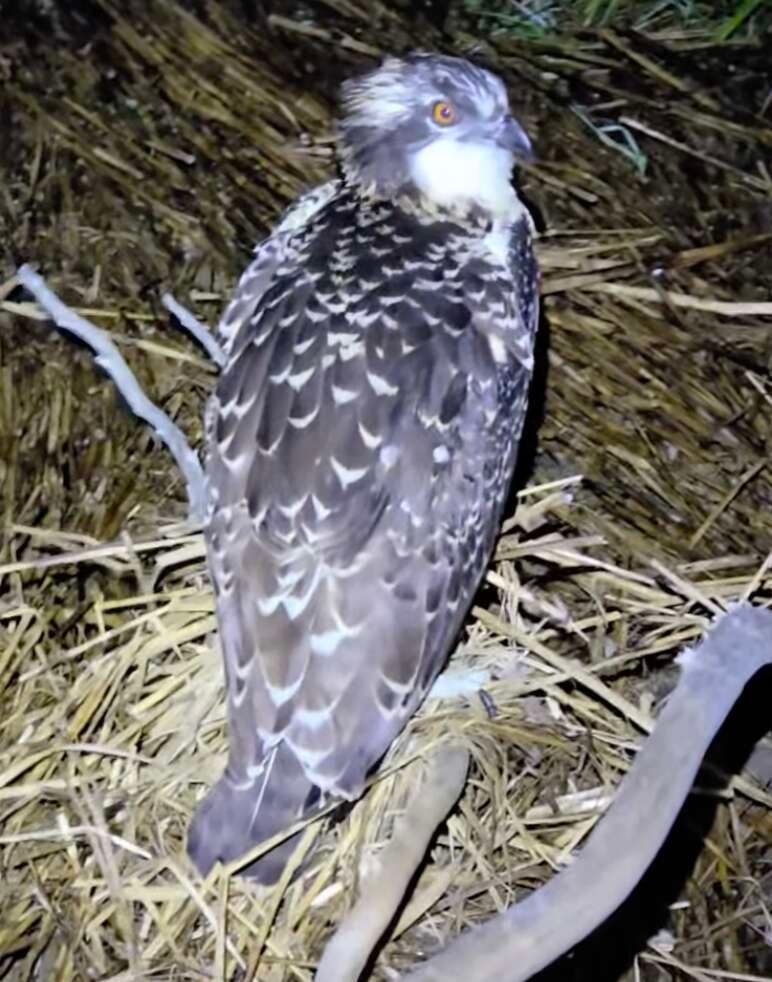
The osprey was a fledgling, likely fallen from the nest or left it too early. At that age, the bird already carried a 4-foot wingspan and the powerful grasp of a hunter, but none of the wariness that would keep an adult safe. His family circled overhead, calling, yet they could not lift him back. Jaeger and Horvath knew the standard rule: don't intervene if the parents are present and the bird is healthy. But this osprey was grounded at the marsh's edge, exposed to predators and the rising water. The rescue team judged the threat real enough to act, even though the capture itself would stress the bird. They had to weigh that stress against the certainty of a night on the ground.
Net, Gloves, and a Quiet Transfer
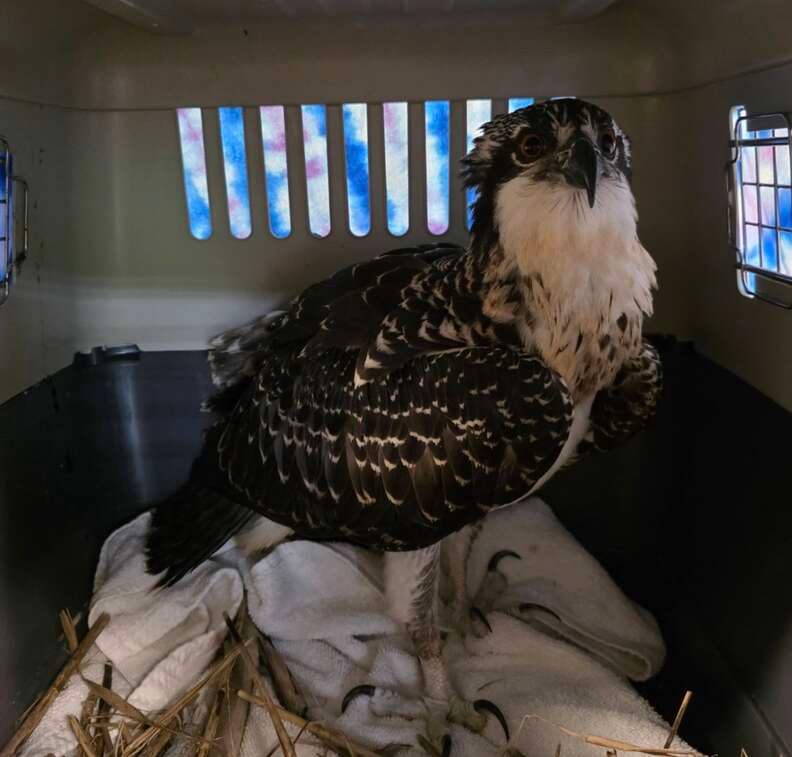
Jaeger approached slowly, sliding a net over the osprey's body. The bird did not react — perhaps too exhausted or too young to read the danger. She then reached in with gloved hands and lifted him, careful of those talons. Once in hand, the osprey's strength was unmistakable; even a fledgling this young could put up a fight, but he stayed calm through the transfer to a carrier. Back at the rescue center, the team set him up in a quiet enclosure where he could eat, rest, and ride out the storm that was sweeping through the region. The plan was to hold him only as long as the weather demanded, then return him to the exact stretch of marsh where his family remained.
A Reunion at the Water's Edge
A few days later, when the skies cleared, Jaeger and Horvath carried the osprey back to the same spot on the beach. They released him toward the nest, and the young bird flew straight up into the branches where his family waited. Jaeger called the moment beautiful — the fledgling settling back into the canopy, the adults settling beside him. She later wrote on Facebook that seeing these creatures up close is a gift she doesn't take lightly. The osprey's story ended the way rescue work is supposed to: with the bird back where he belongs, no rehabilitation needed, just a pause in his first season of flight.
Compiled from published reference material: www.thedodo.com