Why Your Dog Won't Stop Licking That One Spot: Lick Granulomas Explained
A closer look at the chronic skin condition driven by obsessive licking, from breed-specific risks to actionable treatments.
What exactly is a lick granuloma, and how do I spot it?
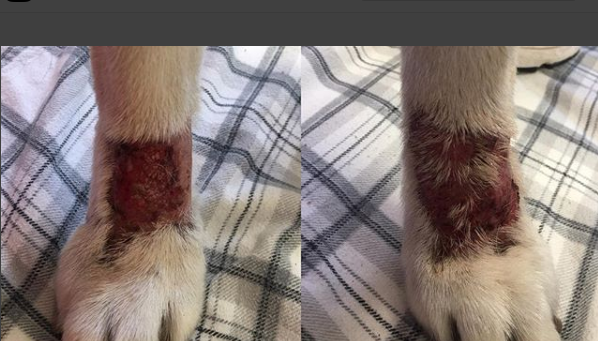
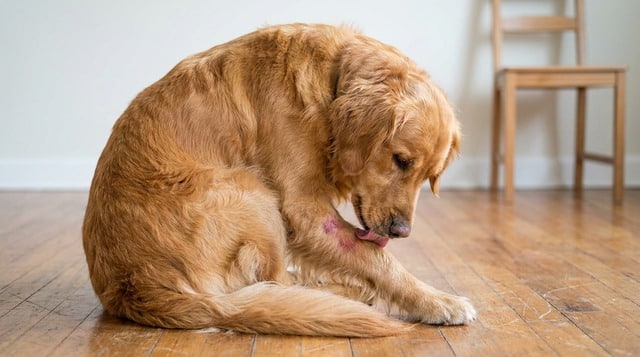
A lick granuloma is a chronic skin wound caused by a dog's repetitive licking of one area, most commonly on the front legs just above the carpal joint. The constant friction strips away hair and damages every layer of skin, creating a thickened, raw, sometimes ulcerated lesion that can be incredibly hard to heal. Under the microscope, even the base layer of skin reveals broken hair follicles, plugged and scarred oil glands, dilated and inflamed capillaries, and little pockets of bacteria. In the early stages, a small patch of hair loss and reddened skin appears—often mistaken for a hot spot. The key difference is that hot spots typically respond to treatment and resolve, while lick granulomas persist and worsen. Secondary bacterial or yeast infections frequently develop, making the itching and irritation even more intense. Saliva stains light-colored fur a reddish-brown. These lesions are often associated with chronic, persistent licking, especially when the dog is alone or when the family is sleeping, and many owners don't catch the wound until it is well-established. Signs to watch for include a bald patch on the top of the wrist or lower leg, raised or scabbed skin, oozing, and a foul odor. The dog obsessively returns to lick the same spot. If the wound is surgically removed, the dog simply licks the incision and creates a brand-new granuloma in its place—managing the underlying cause is just as important as treating the wound itself.
Are certain dog breeds more likely to get lick granulomas?
Medium and large dog breeds are significantly more likely to develop lick granulomas, and some breeds have a hereditary predisposition to anxiety-driven or compulsive behaviors that feed the licking cycle. Black Labrador Retrievers, for instance, have a higher rate of hypothyroidism, a condition that increases skin irritation and can prompt persistent licking. Breeds prone to OCD-like repetitive behaviors are also at greater risk, since chronic licking becomes self-reinforcing once endorphin release turns it into a compulsion. Environmental factors can worsen the situation for susceptible breeds: insufficient exercise, lack of mental stimulation, and prolonged isolation all increase the likelihood that a predisposed dog will develop the condition. Owners of at-risk breeds should watch for early warning signs—a bald patch forming on the front leg just above the wrist, skin that looks raised or scabbed, and a dog that keeps returning to lick the same spot. Catching the habit before a wound forms is far easier than treating an established granuloma. Lick granulomas are one of the most frustrating conditions in veterinary dermatology, partly because they are so difficult to treat and partly because dogs keep making them worse. Awareness of breed-specific risk factors gives owners a head start in prevention, but genetics alone don't determine the outcome—proactive management of the dog's physical health, emotional well-being, and daily routine matters enormously.

How do veterinarians diagnose a lick granuloma?
Diagnosis starts with a visual examination of the lesion—typically on the front legs just above the wrist—and a detailed history of the licking behavior. Vets need to know when the licking began, exactly where the spot is, whether it happens at predictable times such as when the dog is alone or at night, and whether anything has changed recently in the dog's environment or diet. From there, tests rule out underlying causes: allergy panels for food or environmental sensitivities, blood tests for hypothyroidism that is especially common in breeds like Black Labs, and joint assessments for arthritis or past fractures. A skin culture identifies secondary bacterial or yeast infections that need treatment. In some cases, a biopsy confirms the diagnosis by revealing deep skin damage. Microscopic examination can show little pockets of bacteria, broken hair follicles, plugged and scarred oil glands, and dilated and inflamed capillaries even in the base layer of skin. This comprehensive workup is critical because treating the wound alone without addressing the underlying cause almost always leads to recurrence. The lesion may heal, but the dog simply licks a new spot and the cycle starts over. Finding the underlying trigger requires that full diagnostic picture—the wound itself may be obvious, but what's driving the licking is not.
What treatment options work for lick granulomas?
There is no quick fix for lick granulomas. Treatment is usually multi-pronged, addresses both the wound and the underlying trigger, and takes months—most cases require 3 to 6 months, and some stubborn cases take longer. Physical barriers like e-collars or bandaging give the wound a chance to heal by blocking access, though some dogs will immediately start licking a different reachable spot. Long-term antibiotics over 3 to 6 months are common because lick granulomas almost always develop secondary bacterial or yeast infections. Topical cortisone creams, applied once or twice daily, reduce inflammation and itching that drives the licking urge. Anti-inflammatory medications, oral or topical, reduce swelling and pain. Cold laser therapy can vaporize affected tissue with minimal bleeding, sealing nerve tissue to reduce the discomfort that triggers relicking. Acupuncture is used in integrative veterinary practices with some documented success for chronic cases. When behavioral factors are involved, anti-anxiety medications reduce anxiety-driven compulsions. Increasing exercise and mental stimulation—more walks, puzzle feeders, training games, and enrichment activities—redirects the dog's energy away from licking. Topical home remedies can help alongside other treatments: manuka honey applied 3 to 4 times daily has antimicrobial properties and may reduce irritation, while fresh aloe gel and calendula tincture are options some integrative vets recommend. An e-collar should stay in place when applying anything topical so the dog doesn't lick it right off.
Is a lick granuloma contagious to other pets or people?
Lick granulomas are not contagious. The condition results from a dog's compulsive, repetitive licking of one spot—not from an infectious agent. No virus, bacterium, or parasite transmits the condition through casual contact, and there is no evidence that lick granulomas spread to other animals or to humans. The secondary infections that develop within the wound—bacterial or yeast overgrowth—are localized to the affected skin and do not pass from one dog to another. Isolation of the affected dog is not necessary. What makes lick granulomas a serious concern is the depth of the skin damage they cause. The constant friction strips away hair and damages every layer of skin, creating a thickened, raw lesion that can take 3 to 6 months or longer to heal. Underneath the surface, broken hair follicles, scarred oil glands, and inflamed capillaries develop. The wound perpetuates itself because licking releases endorphins, giving the dog a mild but real sense of relief that encourages more licking. Proper wound care—keeping the area clean, using an e-collar to prevent further licking, and following the treatment plan—prevents complications from the secondary infections. Prompt treatment is advised not because of contagion risk but because chronic wounds deepen over time, become more difficult to heal, and cause ongoing discomfort for the dog.
How do I tell a lick granuloma apart from a hot spot?
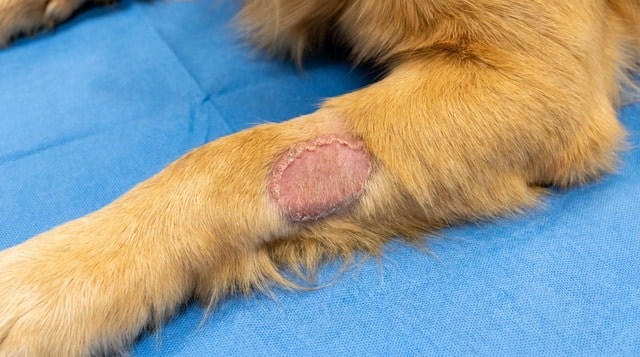
Lick granulomas differ from hot spots in location, appearance, duration, and response to treatment. A lick granuloma typically develops on the front legs just above the wrist, presenting as a bald, thickened, scabbed lesion that persists for months. It often looks raised, may ooze, and can emit a foul odor when secondary bacterial or yeast infections set in. Hot spots, by contrast, can appear anywhere on the body. They are moist, acute lesions that typically respond to standard treatment and resolve within days. If a wound on the front leg doesn't heal with hot spot protocols—antibiotics, cleaning, and topical care—it may actually be a lick granuloma. The key diagnostic difference lies beneath the surface. Lick granulomas involve deep skin damage: broken hair follicles, plugged and scarred oil glands, and dilated, inflamed capillaries in the base layer of skin. Hot spots do not produce this kind of chronic structural damage. Another distinguishing factor is the behavior behind the wound. Hot spots often arise from an immediate irritant—an insect bite, a mat, or a minor scrape—while lick granulomas stem from the dog's compulsive, repetitive licking driven by chronic issues like allergies, joint pain, or anxiety. Saliva staining the surrounding fur a reddish-brown color is another sign that points to a lick granuloma rather than a hot spot. Because the treatments differ significantly, accurate identification matters: a lick granuloma that gets only hot spot treatment will persist and worsen.
Can stress or anxiety actually cause this condition?
Stress and anxiety can absolutely cause lick granulomas. The mechanism is straightforward: licking releases endorphins, giving the dog a mild but real sense of relief. Over time, this temporary comfort turns into a coping mechanism and eventually a full compulsion. Dogs can develop OCD-like behaviors, and repetitive licking is one of the most common forms. The dog licks to feel better, feels temporarily better, and so keeps licking. Separation anxiety, boredom, fear, and canine OCD are all documented triggers. Behavioral patterns are telling—does the dog lick more when the owner leaves the house? More at night? More when the family is sleeping? These details help identify whether the root cause is emotional rather than physical. Lick granulomas are often associated with chronic, persistent licking, especially when the dog is alone or the family is sleeping. Effective treatment addresses the behavioral component directly. Increased exercise helps burn off anxious energy. Mental stimulation through puzzle feeders and training games redirects the dog's focus away from the licking habit. Anti-anxiety medications may be necessary to reduce the compulsions driving the behavior. Without addressing the emotional root, treatment often fails: the wound may heal temporarily, but the ingrained habit restarts the cycle. The licking becomes self-perpetuating, independent of whatever originally triggered it, because the endorphin reward keeps reinforcing the behavior each time.
Compiled from published reference material: iheartdogs.com