Agility Against All Odds: A Handler's Lung Disease Doesn't Stop Her Border Collie
Carolyn Lathrop and her Border Collie Huselebrate agility wins despite her needing an oxygen concentrator, thanks to distance training and a supportive team.
How can someone with a lung disease compete in dog agility?
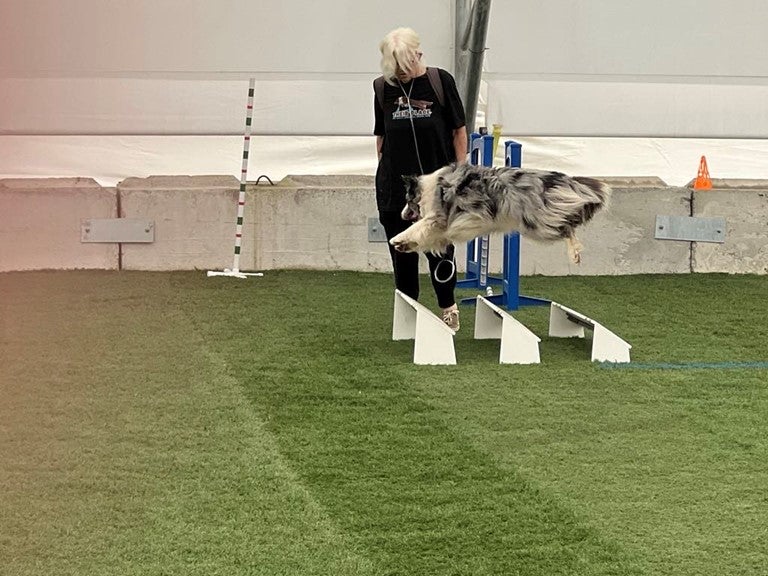
Carolyn Lathrop competes in agility despite interstitial lung disease by using a portable oxygen concentrator and focusing on distance training. Diagnosed with the condition, she cannot exert herself like typical handlers, so she relies on verbal commands to direct Hake, her Border Collie. The concentrator is not light, and she acknowledges she cannot always be where she needs to be on course. To compensate, she has taught Hake an extensive vocabulary of words, turning her self-described weakness as a 'horrible handler' into a specialized skill set. In practice, this means Carolyn cues Hake from afar while the dog reads her verbal signals rather than her body position. The approach has produced results: in the fall, as part of the West Virginia-based team Exquse Me, We're Trying, they won the Regulation Sophomore Team Championship. Now on The Mixed Nuts team, Carolyn credits her team captain, Nikki Hall, for devising course plans that minimize physical strain, calling her 'unbelievably generous with her time and expertise.'
What training methods work for agility with limited mobility?
Carolyn Lathrop's approach to agility with limited mobility is deeply influenced by her early obedience training. In 1965, she got a Miniature Poodle puppy and taught herself by reading books, earning a Companion Dog (CD) title and later a Companion Dog Excellent (CDX) before leaving for college. She describes herself as having 'always been a horrible handler,' which paradoxically became an advantage: because she could not rely on physical positioning, she taught all her agility dogs a large vocabulary of verbal commands. With Hake, this means she can direct him through courses using words alone while wearing a portable oxygen concentrator — a device she runs in despite its weight, since her interstitial lung disease precludes exertion. The concentrator limits where she can physically be on course, so distance cues become essential. She positions herself at a manageable spot, calling out directional and obstacle commands, so Hake responds to the verbal signals rather than following her body. This verbal-first method works because Border Collies like Hake love doing things and are eager to engage with whatever game their handler offers. The result is a partnership where the handler's physical limitation has shaped a communication system precise enough to compete — and win — in regulation team events.
Why are Border Collies like Hake suited for agility?
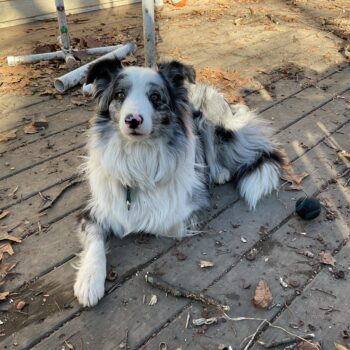
Border Collies like Hake are suited for agility due to their high energy and love for tasks, making them eager partners in the sport. Hake, at 2 ½ years old, exemplifies this with his enthusiasm; even after long trial weekends when Carolyn is exhausted and ready to go home, he drags her toward the practice jump because he thinks more practice would be extremely fun. This breed's natural drive complements agility training, as reflected in Hake's registered name — Jaillbreak's On the Lamb CDX OA OAJ XF — which marks titles in obedience and multiple agility classes including Open Agility and Open Agility Jumpers. His parents both carry agility titles, and his mother Molly is being worked toward a MACH by friend Lisa DeMott after breeder Lori Vance's death. On his own time, Hake does not believe in rest: he assigned himself the job of keeping squirrels off the bird feeder, and if nothing more interesting comes along, he does that.
How long has Carolyn been involved in dog sports?
Carolyn Lathrop has been involved in dog sports since childhood, starting around 1958 when she attended the National Capital Kennel Club's annual dog show with her family and saw a child handling a Standard Poodle in obedience. Her father told her, 'See? You could do that,' and she remembers thinking, 'Why yes…I could.' Her first hands-on experience came in 1965 with a Miniature Poodle puppy; she trained it by reading books and earned a Companion Dog (CD) title, later adding a Companion Dog Excellent (CDX) before leaving for college. She still has friends from dog training in the 1960s and early 1970s. Her agility career began early in AKC's history — she recalls traveling from Maryland to North Carolina with an Irish Water Spaniel to compete in Standard, the only class offered at the time. A friend asked what title her dog would get if they qualified, and Carolyn had no idea. It just seemed like fun.
How does the Agility League support teams with physical limitations?
The Agility League supports teams with physical limitations through personalized strategies from team captains. Nikki Hall, captain of The Mixed Nuts, provides intuitive guidance that considers each dog and handler's unique needs. For Carolyn Lathrop, who wears a portable oxygen concentrator due to interstitial lung disease and cannot exert herself, Nikki has been 'incredibly intuitive about dogs' and 'amazing in figuring out ways that I can get Hake around the courses with minimal need for physical exertion.' This looks like planning specific positioning points where Carolyn can stand and call out verbal cues rather than running alongside Hake. Nikki's support extends beyond one handler — she takes into account 'every tiny nuance of dog and human limitations' for every team member. She is 'unbelievably generous with her time and expertise and support,' Carolyn says, and 'amazingly inclusive in her love of the sport and helping other people enjoy it to the extent that they can.' For handlers facing physical challenges, this kind of captain-level coaching turns courses that seem unrunnable into manageable puzzles.
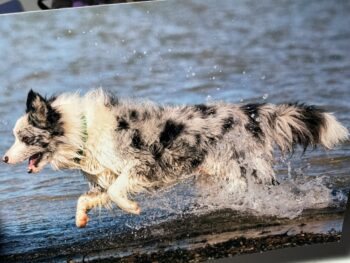
What are Hake's key achievements in agility?
Carolyn Lathrop and Hake's agility achievements are built on distance handling, essential due to Carolyn's interstitial lung disease and the use of a portable oxygen concentrator. She has trained Hake to respond to an extensive vocabulary of words, enabling him to perform courses based solely on her verbal cues from a stationary position. Their notable accomplishments include winning the Regulation Sophomore Team Championship as part of Exquse Me, We're Trying, and Hake holds multiple agility titles, evident in his registered name Jaillbreak’s On the Lamb CDX OA OAJ XF. Even after demanding trial weekends, Hake's enthusiasm remains high, often dragging Carolyn to practice jumps for more training. Both of his parents have agility titles, with his mother Molly being worked toward a MACH by Lisa DeMott after the death of breeder Lori Vance. Currently, they are competing with the team The Mixed Nuts, continuing their journey in agility.
What activities does Hake enjoy outside of agility?
Outside of agility, Hake enjoys self-assigned tasks that keep him active and mentally stimulated. Specifically, he has taken on the job of keeping squirrels off the bird feeder, a duty he performs when there are no more interesting activities, demonstrating his Border Collie instinct to work. This behavior aligns with the breed's characteristics; Border Collies are known for their herding and problem-solving skills, which Hake applies in everyday scenarios. Unlike dogs that rest during downtime, Hake does not believe in time off, constantly seeking engagement. His love for agility spills over into these activities, as he treats them as another form of play. This constant drive ensures he remains agile and responsive, traits that benefit his agility performance with handler Carolyn Lathrop, who requires distance training due to her lung disease.
Compiled from published reference material: www.akc.org