给狗洗澡,8个步骤从每月一次到求助美容师
每月一次只是起点,毛发类型决定洗护方式——这8个步骤告诉你正确的洗发顺序、冲洗方向、吹干分区,以及何时该联系专业美容师。
Once a Month Is the Baseline for Healthy Coats
For a dog with normal skin and a healthy coat, bathing more than once a month strips the natural oils that keep fur and skin in good shape. Those oils do more than moisturize—they also help slough off dirt and keep the coat from absorbing odors, which is why a monthly wash is usually enough for a typical indoor dog. The absolute ceiling, unless your vet directs otherwise, is one bath per week; anything more dries the skin and can damage the hair. If your dog has allergies or a medical condition, your vet will set a schedule, and for environmental allergies like grass, more frequent baths may be needed to remove allergens from the skin and coat. Lifestyle matters too: a dog that rolls in mud, sleeps in your bed, or works outdoors will need more washes than a lap warmer. Watch for signs of over-bathing—dry, irritated skin—and adjust accordingly.
Coat Type Decides Everything From Wash to Brush
Coat type determines not only how often you bathe but also how you brush. Siberian Huskies have oily coats that naturally slough off dirt and resist absorbing odors, so they rarely need baths—but they do need thorough, frequent brushing to prevent dead fur from building up against the skin, which can lead to overheating. Smooth-coated dogs like Pit Bulls and Greyhounds don't need frequent baths because it's easy to wipe them clean with a damp cloth between washes. Double-coated breeds such as Labrador Retrievers and Rottweilers have a soft underlayer beneath the topcoat; regular brushing removes dead undercoat and helps you go longer between baths. Hair-like coats—Yorkshire Terriers and Poodles—require haircuts as well as regular baths, with a full groom every four to twelve weeks depending on how long you let the coat grow. Bathing at home can extend that interval, but only if you keep up with thorough brushing of the longer coat to prevent matting. For any coat, the right brush makes the job easier—match your tool to your dog's fur type.
Skip Human Shampoo—Your Dog's Skin pH Is Different
If your dog's skin is sensitive, opt for a shampoo formulated specifically for dogs—human shampoos are more acidic and can strip natural oils, while added scents and chemicals often irritate. Dish soaps fall into a harsher category; the research mentions them only for particular needs like grease, oil-based toxins, or sap, and always under veterinary direction. When choosing a dog shampoo, look for options like oatmeal for sensitive skin or deodorizing for strong odours. Conditioners, though optional, help detangle and soften the coat, and they add moisture if you're bathing more often because of mud or allergies. For long-coated dogs, a leave-in spray conditioner after the bath eases post-bath brushing and reduces matting. Always avoid human conditioners, which disrupt your dog's pH balance. If you have a concentrated shampoo, dilute it as directed—this extends the bottle's life while still cleaning effectively.
Brush Before You Wet a Single Hair
Before bathing a double-coated breed, standard brushing may miss the dense undercoat. Pairing your brush with a pre-bath blow-out using a professional grooming dryer removes excess fur much more efficiently. This matters for breeds like Siberian Huskies, which need thorough brushing to stop dead fur from building against the skin and causing overheating. For short double coats such as Labradors and Rottweilers, consistent pre-bath brushing helps maintain a healthy coat and prolongs the interval between baths. The goal is to clear away anything that would block shampoo from reaching the skin—so the lather actually cleans the base of the coat, and you don't waste product on fur that would only end up in the drain. In practice, begin by brushing to detangle, then switch to the dryer held 1–2 feet away, moving the nozzle in steady back-and-forth sweeps from the neck down to the tail. The forced air lifts dead undercoat hairs that a brush alone might compress or fail to reach, and you can collect the released fur with a damp hand or a rubber brush. Working in small sections ensures the airflow doesn't stay on any one spot long enough to heat the skin, and it lets you spot mats while they're still dry and easier to trim or pick out. This pre-bath blow-out is especially valuable for heavy shedders, as it reduces the fur that would otherwise cling to wet coat and clog your drain.
Wash in the Right Order: Shampoo First, Then Water
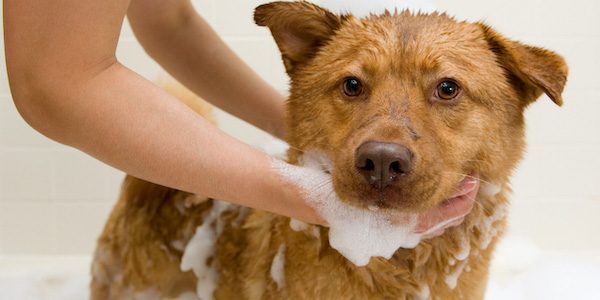
Apply a diluted shampoo to your dog's dry coat before wetting them. Rub it in, then add water to work up a lather—this gets the shampoo closer to the skin than wetting first. Use your fingers or a soft rubber brush like the KONG Zoom Groom to work through thick fur. Don't forget paws, armpits, stomach, and tail, which are easy to miss. A second shampoo pass gives a deeper clean, but skip it for sensitive skin. Keep shampoo and water off the face; use a dampened washcloth or a soap-free face wash like Tropiclean's to wipe the muzzle and around the eyes. If you do a second wash, it's only for dogs who tolerate it—sensitive skin can't handle the extra stripping.

Rinse From the Back of the Neck Down—and Guard the Ears
Rinsing is where many baths go wrong. Start at the back of the neck and between the front shoulders, then let gravity pull the water downward through the coat—this way each rinse does double duty. Work methodically through every nook: armpits, stomach, groin, and between the toes, where shampoo and dirt love to hide. Rinse until the water runs completely clear, with no bubbles or suds coming off. Leftover shampoo residue is easy to spot later—it shows up as darker, clumping fur that feels sticky even after drying. To protect the ears, gently pinch each ear closed while rinsing that area, or place cotton balls in the ear canals before the bath (and remember to remove them afterward). Water trapped in ears is a leading cause of ear infections, so after the bath, use a vet-approved ear-cleaning solution to dry the canals thoroughly, and towel the outer ear dry to prevent moisture from sitting. Also avoid aiming water directly at the face—use a damp washcloth to wipe the muzzle and brow instead.
Towel-Dry Smooth Coats, Blow-Dry the Rest
Moisture left against the skin is a recipe for problems: it can lead to itching, skin infections, and hot spots, and damp fur matts much faster than dry fur. That's why complete drying matters. For smooth single-layer coats like a Pit Bull's, a thorough towel dry with a super-absorbent microfiber shammy towel is usually sufficient—just blot and rub until the coat feels dry to the touch. Double-coated and hair-like coats need a blow dryer to get all the way down to the skin; a human blow dryer on the lowest heat setting works, but a professional grooming dryer dries faster and helps blow out excess fur. Always start with the face and head: towel those off first, then move to the body, giving the face time to air dry. If you use a blow dryer near the chest or scruff, shield your dog's ears and eyes with your hand, and consider a Happy Hoodie—it muffles the noise, protecting their hearing, and many dogs find the gentle compression calming. If you truly let your dog air-dry, towel off as much moisture as possible first, then brush the coat every few minutes as it dries; for hair-like coats, this is especially important because the drying fur can curl and tangle quickly.
Blow-Dry in Sections, Not Circles
Blow-drying properly prevents both skin irritation and tangled fur. Start by towel drying as much as possible, then spray on a leave-in conditioner—this helps detangle and adds a layer of protection before the heat. Work in small sections, beginning at the back of the head and moving down with gravity. Keep the airflow moving in steady back-and-forth strokes; never use a circular motion, which twists long fur around itself. Hold the dryer 1 to 2 feet away from the skin, and move the nozzle continuously so no single spot gets too hot. For longer fur, hold the dryer even farther away to avoid blowing tangles into the coat. Use a pointed nozzle for fast drying on the body, and a flat nozzle to lay the coat straight; when you use a nozzle, keep the dryer at a greater distance. Remove the nozzle for sensitive areas like the belly and paws, where you can hold the dryer closer for a gentler airflow. If you're using a human blow dryer, set it to the lowest heat and test it on your own arm first. Professional grooming dryers often have no heating element, but the motor still warms the air, so keep moving to avoid burning or irritating the skin.
Turn Bath Time Into a Treat-Filled Game
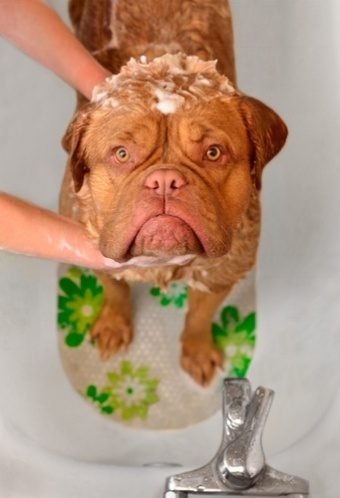
Many dogs dread baths, and forcing a panicked dog can lead to bites or injury from flailing in the tub. Puppies need early, positive introductions—pair bathing with treats and short sessions so they learn it's not scary. For adult dogs with a bad history, smear peanut butter or wet food on a lick pad stuck to the tub wall. That keeps them occupied and builds a positive association. If your dog shows stress signals like tucked tail or whale eye, stop and reassess your approach. It may take weeks of desensitization, but a dog that's calm in the tub is safer for everyone. Professional groomers use the same positive-reinforcement techniques, so don't hesitate to ask for help if your home baths are turning into a fight.
Heavily Matted? Medicated Soak? Fleas? Call a Groomer
Some baths are best left to a professional groomer. For a heavily matted coat, groomers often do a preliminary clipping before the bath, then fine-tune the haircut after blow-drying—this is far safer than trying to work out severe mats at home. If your dog needs a medicated shampoo prescribed by your vet, many require a 10- to 15-minute soak before rinsing; a groomer can apply it correctly, time it precisely, and rinse thoroughly to help sensitive skin recover. Fleas are another reason: a professional wash is designed to suffocate the fleas in the coat, and you can use that time to treat your home for fleas. For dogs that panic or become defensive during baths, a Fear Free Certified groomer uses force-free handling, reads stress signals, and knows when to pause, which protects both your dog and your relationship with them. Groomers also bring equipment many owners don't have—professional dryers, grooming tables, and high-velocity blow dryers—and they can add services like nail trims, ear cleaning, and even teeth brushing. Even if your dog doesn't need a haircut, a groomer's bath and blow-dry often leaves the coat fluffier and healthier than a home bath.
Compiled from published reference material: www.preventivevet.com